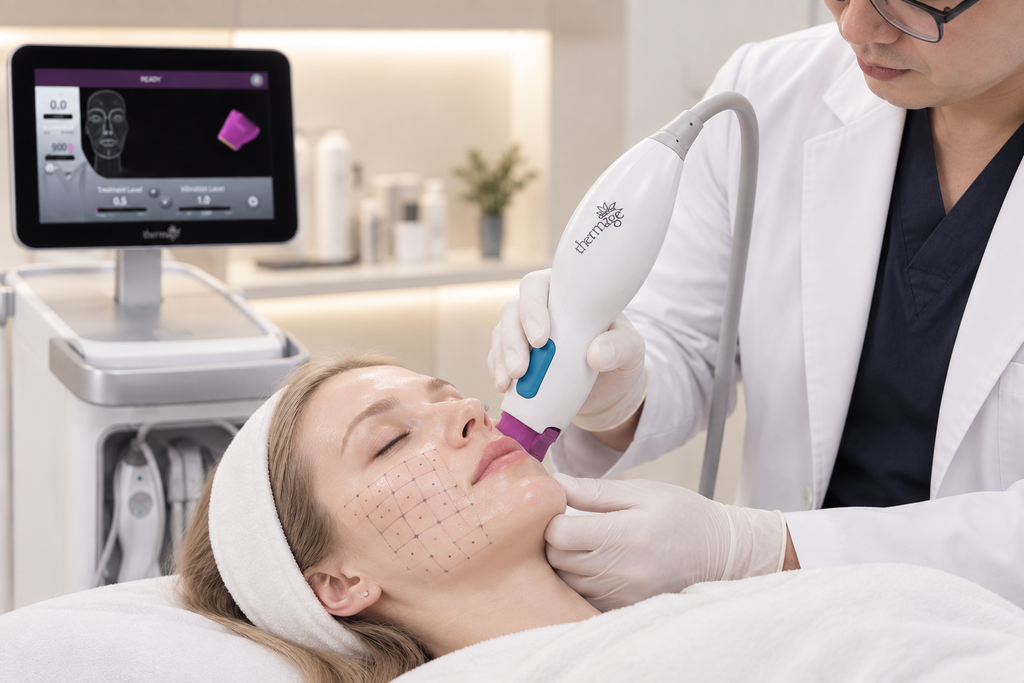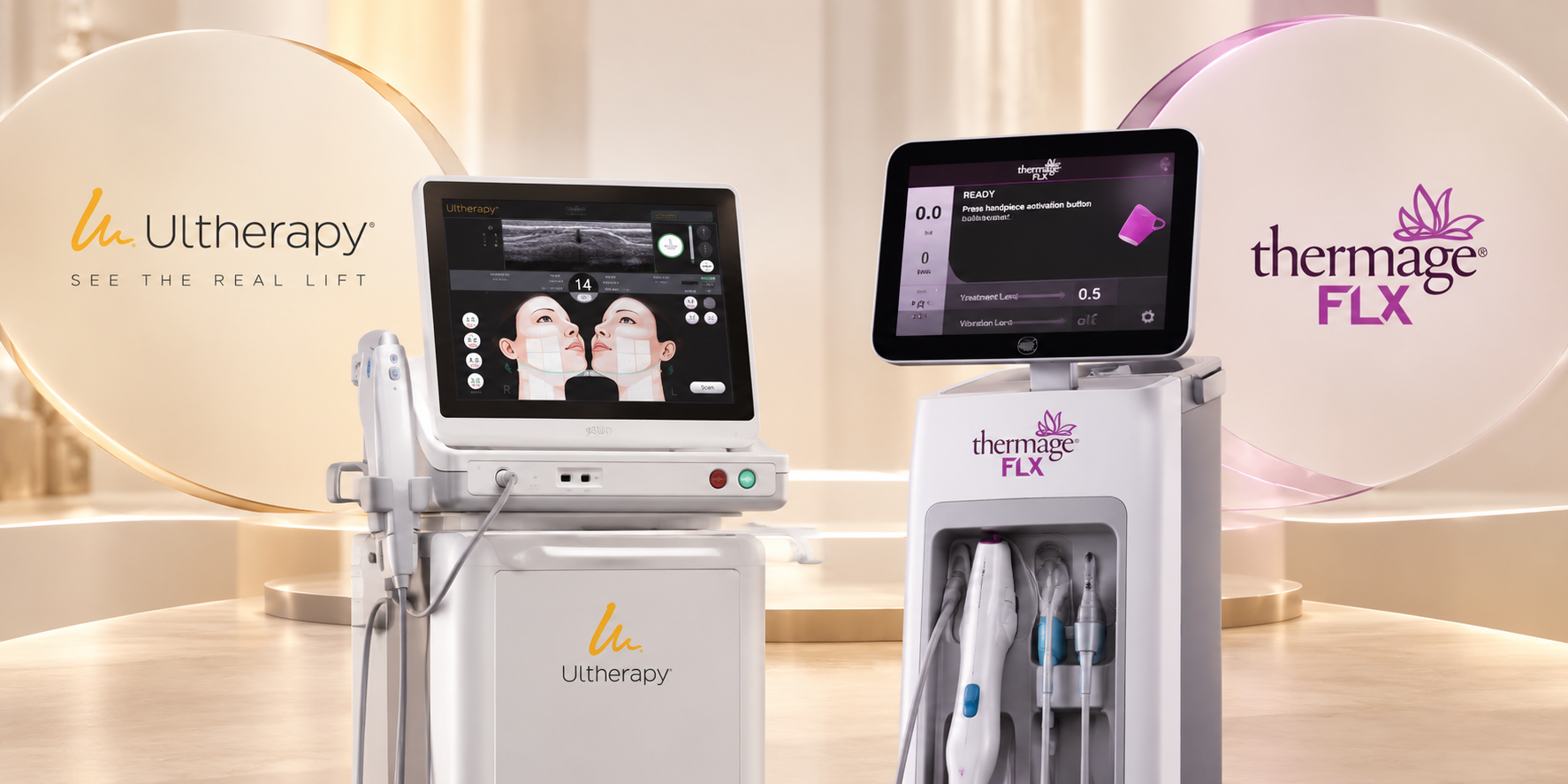
If you are searching for an anti-aging treatment in Busan, you have probably come across two popular Korean aesthetic treatments: Ulthera and Thermage.
Both are non-surgical treatments designed to address signs of facial aging, but they work differently.
Ulthera vs Thermage—which one is better for your skin?
The answer depends on what you want to improve.
Are you noticing a less-defined jawline or mild facial sagging? Or are you more concerned about skin firmness, fine lines, and changes in skin texture?
At Signal Plastic Surgery in Busan, both Ulthera and Thermage are available. Treatment recommendations are based on individual facial anatomy, skin condition, and aesthetic goals rather than assuming one device is better for everyone.
This guide compares how they work, who may benefit, treatment costs, discomfort, recovery, and what international patients should know before booking.
- Ulthera vs Thermage: What’s the Difference?
- How Does Ulthera Work?
- How Does Thermage FLX Work?
- Which Is Better for Sagging Skin, Jawline Definition, and Fine Lines?
- Ulthera vs Thermage: Which Treatment Is More Painful?
- Can Ulthera or Thermage Cause Facial Fat Loss?
- How Long Do Ulthera and Thermage Results Last?
- Ulthera vs Thermage Cost in Busan
- Can You Combine Ulthera and Thermage?
- Why Choose Signal Plastic Surgery for Anti-Aging Treatment in Busan?
- Frequently Asked Questions About Ulthera vs Thermage
- Planning Anti-Aging Treatment in Busan?
Ulthera vs Thermage: What’s the Difference?
Ulthera and Thermage are both energy-based aesthetic treatments, but they use different technologies.
Ulthera (Ultherapy) uses microfocused ultrasound energy to create controlled thermal effects at selected tissue depths.
Thermage FLX uses monopolar radiofrequency (RF) energy to heat tissue and stimulate collagen remodeling.
Both aim to improve signs of skin aging without surgical incisions, but their treatment characteristics and potential benefits differ.
| Ulthera | Thermage FLX | |
|---|---|---|
| Technology | Microfocused ultrasound (MFU-V) | Monopolar radiofrequency (RF) |
| Main Focus | Lifting and improving mild skin laxity | Skin tightening and firmness |
| Energy Delivery | Focused energy at selected depths | Volumetric heating of treated tissue |
| Common Treatment Areas | Face, jawline, neck | Face and selected body areas |
| Typical Concerns | Mild sagging, reduced definition | Skin laxity, reduced firmness, fine lines |
| Surgery Required | No | No |
| Recovery | Usually minimal | Usually minimal |
| Results | Develop gradually | Develop gradually |
Although Ulthera is often described as a lifting treatment and Thermage as a tightening treatment, their effects overlap.
Neither treatment replaces a surgical facelift when significant tissue descent or excess skin is present.

How Does Ulthera Work?
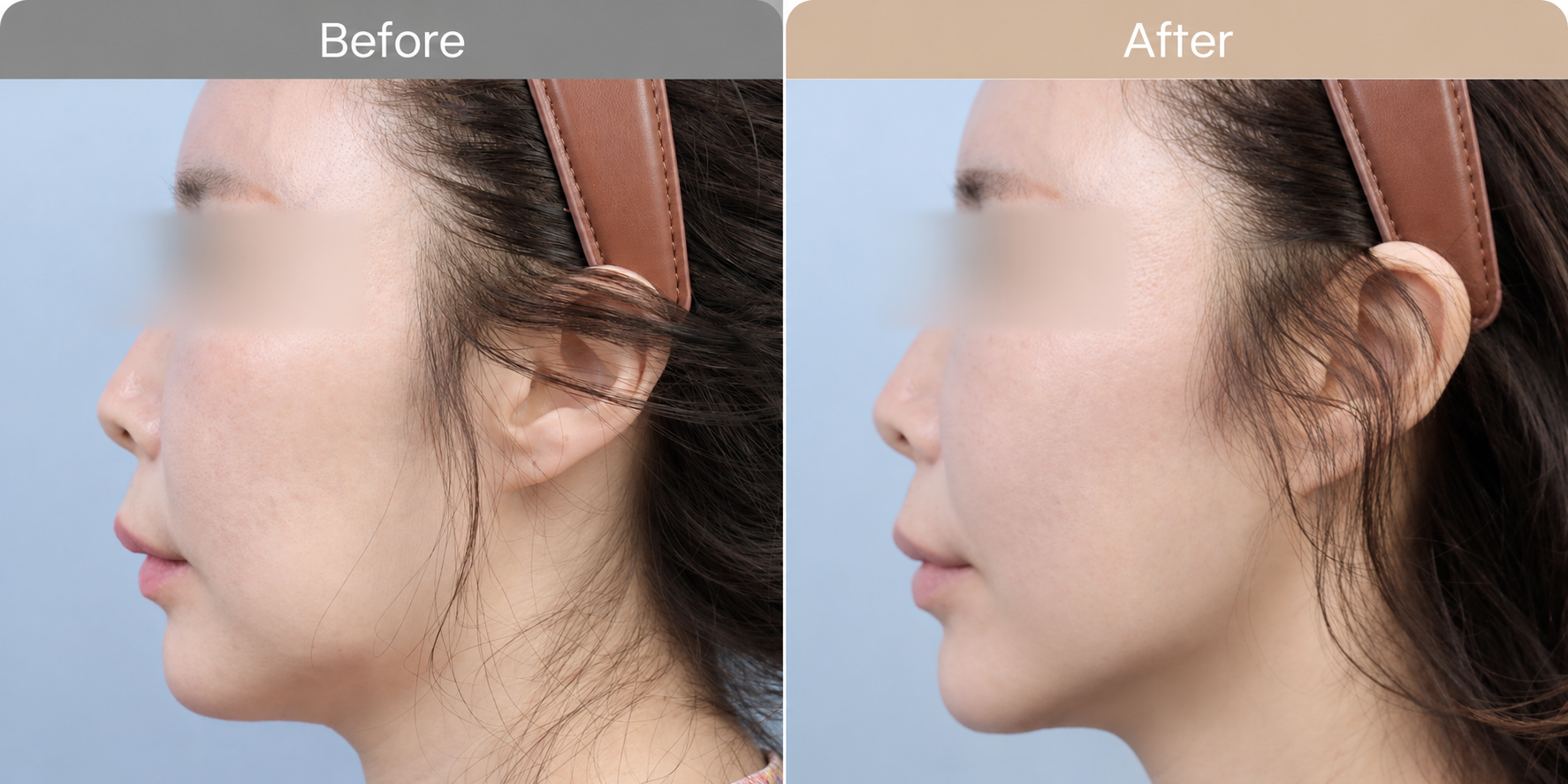
Ulthera uses focused ultrasound energy to deliver heat at specific depths beneath the skin.
The treatment uses ultrasound imaging to help the practitioner visualize tissue layers during energy delivery.
This allows the provider to select treatment depths according to the patient’s anatomy and treatment plan.
The controlled thermal effects trigger a healing response associated with collagen remodeling.
Over time, this may improve mild skin laxity and create a subtle lifting effect.
Ulthera may be considered for patients concerned about:
- Mild sagging around the jawline
- Reduced definition along the lower face
- Mild skin laxity beneath the chin
- Early signs of facial tissue laxity
- Mild laxity in appropriate neck areas
However, Ulthera does not physically reposition facial tissues in the same way as surgery.
Results are generally more subtle than a surgical lift and depend on the patient’s anatomy, degree of laxity, and treatment settings.
How Does Thermage FLX Work?
Thermage FLX uses monopolar radiofrequency energy to heat tissue beneath the skin while incorporating surface cooling.
The treatment is designed to produce controlled thermal effects that promote collagen remodeling.
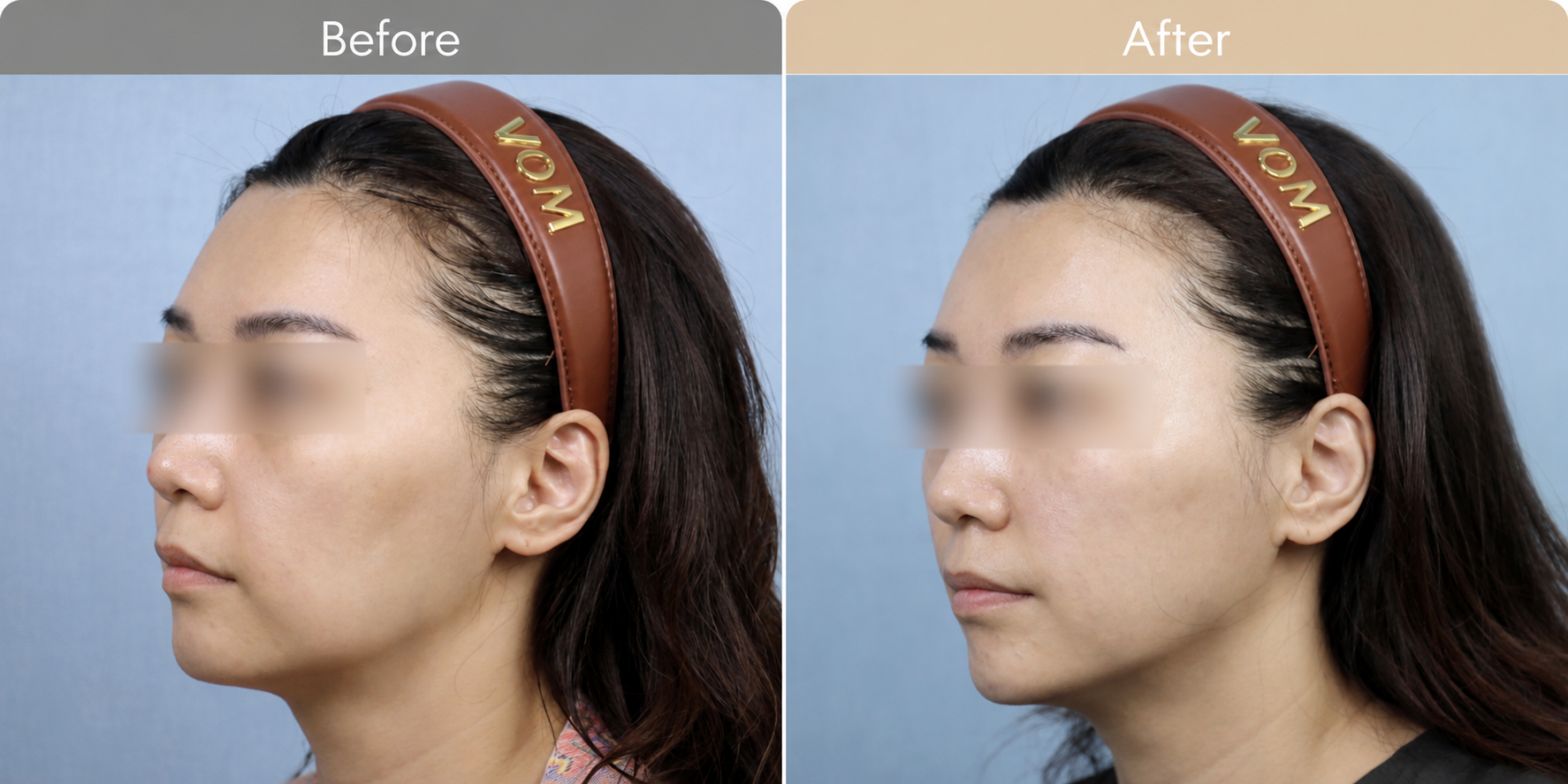
As the treated tissues respond over time, patients may notice improvements in skin firmness and mild laxity.
Thermage FLX may be considered for patients concerned about:
- Reduced facial skin firmness
- Mild skin laxity
- Fine lines associated with skin aging
- Early changes in skin elasticity
- A desire for non-surgical skin tightening
Thermage is not a treatment for every type of wrinkle.
Deep folds caused by significant tissue descent, volume loss, or facial structure may require a different approach.
Which Is Better for Sagging Skin, Jawline Definition, and Fine Lines?
One of the most common questions international patients ask is whether Ulthera or Thermage will produce a more noticeable improvement.
The most useful comparison begins with the concern being treated.
| Your Main Concern | Treatment to Discuss | Why |
|---|---|---|
| Mild facial sagging | Ulthera | Focused ultrasound may help improve mild tissue laxity |
| Less-defined jawline | Ulthera | May provide subtle improvement in lower-face definition |
| Reduced skin firmness | Thermage FLX | RF heating is commonly used for skin tightening |
| Early fine lines and laxity | Thermage FLX | May improve selected signs of skin aging |
| Both laxity and reduced firmness | Ulthera and/or Thermage | Treatment choice depends on anatomy and the underlying concern |
| Significant sagging or excess skin | Surgical consultation | Non-surgical devices may not provide sufficient correction |
These are general considerations, not fixed rules.
For example, a patient with a less-defined jawline may have tissue laxity, excess subcutaneous fat, or a naturally soft jawline structure.
The same treatment will not produce identical results in all three situations.
Ulthera vs Thermage: Which Treatment Is More Painful?
Pain is one of the biggest concerns for first-time patients considering non-surgical lifting in Korea.
Both treatments can cause discomfort, but the sensation differs.
- Ulthera
- Patients may experience brief, deep sensations of heat, aching, or tingling as ultrasound energy is delivered.
- Discomfort can vary depending on the treatment area, energy settings, and individual sensitivity.
- Thermage FLX
- Patients commonly describe a warming or heating sensation with intermittent cooling during treatment.
- The FLX system incorporates features designed to improve treatment comfort, but discomfort is still possible.
There is no reliable way to guarantee that one treatment will feel less painful for every patient.
Before booking, ask about the available comfort measures, whether numbing or pain management is offered, and what to expect during treatment.
Can Ulthera or Thermage Cause Facial Fat Loss?
This is an important concern, especially for younger patients or people with naturally slim faces.
Both ultrasound and radiofrequency treatments deliver heat into tissue. Unwanted changes in facial fullness are a concern discussed in aesthetic medicine, although the risk and mechanisms vary by device, treatment parameters, anatomy, and individual circumstances.
It would be inaccurate to say that every patient will lose facial fat—or that either treatment carries absolutely no risk of unwanted contour changes.
Patients who already have hollow cheeks, limited facial volume, or previous aesthetic treatments should discuss these concerns before treatment.
More energy or more shots does not automatically mean a better result.
Appropriate treatment planning is particularly important when the goal is tightening without creating an overly hollow appearance.
How Long Do Ulthera and Thermage Results Last?
Neither treatment permanently stops facial aging.
Both rely partly on tissue responses that develop gradually after energy delivery.
| Ulthera | Thermage FLX | |
|---|---|---|
| Initial Changes | Some patients notice early changes | Some patients notice early tightening |
| Developing Results | Often over approximately 2–3 months | Often over approximately 2–6 months |
| Duration | Commonly discussed as around 1 year or longer in some patients | Commonly discussed as around 1 year or longer in some patients |
| Repeat Treatment | Based on individual response and reassessment | Based on individual response and reassessment |
These timelines are approximate rather than guaranteed.
The degree and duration of improvement depend on factors such as age, baseline skin laxity, treatment settings, individual collagen response, and ongoing aging.
A follow-up assessment can help determine whether additional treatment is appropriate.
Ulthera vs Thermage Cost in Busan
For international patients comparing anti-aging treatments in Korea, understanding how each treatment is priced is important.
At Signal Plastic Surgery in Busan, the following prices apply:
| Treatment | Price (KRW) |
|---|---|
| Ulthera — 100 shots | ₩528,000 |
| Thermage FLX — 600 shots | ₩3,960,000 |
Ulthera is priced per 100 shots, so the total cost depends on the number of shots recommended.
For example:
| Ulthera Shot Count | Calculated Price |
|---|---|
| 100 shots | ₩528,000 |
| 200 shots | ₩1,056,000 |
| 300 shots | ₩1,584,000 |
| 400 shots | ₩2,112,000 |
| 600 shots | ₩3,168,000 |
The additional Ulthera totals are calculated from the supplied per-100-shot price and are illustrative, not confirmation that each package is offered at that exact total. Final availability, treatment plan, and quotation should be confirmed with the clinic.
The number of shots should not be selected based on price alone.
A larger treatment area or different treatment plan may require a different amount of energy delivery.
Likewise, the 600-shot Thermage price should not be directly compared with a 600-shot Ulthera treatment as if the devices used equivalent energy or identical treatment methods.
The two technologies have different treatment characteristics, so shot counts are not interchangeable.
Can You Combine Ulthera and Thermage?
Some patients ask whether they should receive both treatments to address lifting and tightening concerns.
Combining different energy-based treatments may be considered in selected cases, but it is not automatically better than choosing one appropriate treatment.
The decision depends on:
- The degree of skin laxity
- Facial fat distribution
- Skin thickness and condition
- Previous aesthetic treatments
- Treatment areas and energy settings
- Individual tolerance and recovery considerations
Combining treatments may increase total cost, discomfort, and the potential for unwanted effects.
The appropriate sequence and timing should be determined by the treating physician rather than assuming that both devices are necessary.
Why Choose Signal Plastic Surgery for Anti-Aging Treatment in Busan?
Choosing between Ulthera and Thermage should begin with understanding your facial anatomy rather than choosing the device with the most shots or the highest price.
Signal Plastic Surgery in Busan offers both Ulthera and Thermage FLX, allowing patients to discuss different non-surgical approaches to facial aging.
The clinic is led by a board-certified plastic surgeon with an M.D. and Ph.D. and experience as a former university hospital professor.
Consultation considers:
- The main area of concern
- Skin laxity and facial tissue position
- Existing facial volume
- Jawline and cheek contours
- Previous lifting or injectable treatments
- Expected benefits and treatment limitations
- Whether a non-surgical approach is suitable
International patients can also receive consultation assistance and medical interpretation support when arranging treatment in Busan.
The goal is to select an appropriate treatment based on individual needs, not simply to recommend the same device to every patient.
Frequently Asked Questions About Ulthera vs Thermage
1. Ulthera vs Thermage: Which is better for facial lifting?
Ulthera is commonly considered when mild facial laxity and lifting are the main concerns. Thermage FLX is often considered for skin firmness and tightening. However, their effects overlap, and the appropriate choice depends on facial anatomy and treatment goals.
2. Is Ulthera or Thermage better for a sagging jawline?
Ulthera may be considered for mild lower-face laxity, but the cause of a less-defined jawline matters. Excess fat, skin laxity, and natural facial structure may require different approaches.
3. Which treatment is better for patients in their 30s?
Age alone does not determine treatment suitability. Some patients in their 30s have mild skin laxity, while others are more concerned about facial volume or skin texture. An assessment is needed to determine whether treatment is appropriate.
4. Can Ulthera or Thermage make my face look thinner?
Unwanted changes in facial fullness or contour are possible concerns with energy-based treatments. Patients with naturally slim or hollow faces should discuss these risks and their treatment goals before proceeding.
5. Is Ulthera more painful than Thermage?
The sensations differ, and individual pain tolerance varies. Ulthera may cause deep aching or heat sensations, while Thermage produces heating sensations with cooling. Neither is guaranteed to be painless.
6. How much does Ulthera cost in Busan?
At Signal Plastic Surgery, Ulthera costs KRW 528,000 per 100 shots. The total price depends on the recommended treatment plan and shot count.
7. How much does Thermage FLX cost in Busan?
At Signal Plastic Surgery, Thermage FLX costs KRW 3,960,000 for 600 shots. Patients should confirm the final quotation and treatment details before booking.
8. Can I get Ulthera and Thermage on the same day?
A combination treatment may be considered in selected patients, but same-day treatment is not automatically appropriate. The physician should assess the treatment areas, energy settings, individual risks, and whether combining treatments offers a meaningful benefit.
9. How long should I stay in Busan after Ulthera or Thermage?
These treatments generally do not require the extended recovery associated with surgery. However, temporary redness, swelling, tenderness, or other effects can occur. Travelers should confirm their individual treatment and travel plans with the clinic.
10. Is Ulthera or Thermage better for first-time anti-aging treatment in Busan?
Neither device is automatically the best first treatment. The choice depends on whether the main concern is mild sagging, reduced skin firmness, or another issue. A consultation can help determine whether Ulthera, Thermage, another treatment, or no treatment is the most appropriate option.
Planning Anti-Aging Treatment in Busan?
If you are considering Ulthera vs Thermage, start by identifying what you want to improve.
Ulthera may be worth discussing when mild facial sagging and reduced definition are the main concerns.
Thermage FLX may be worth discussing when reduced skin firmness and mild laxity are the priorities.
But neither treatment is automatically better for everyone, and neither should be expected to produce the same results as surgery.
At Signal Plastic Surgery, international patients can discuss their skin concerns, treatment options, expected recovery, and costs before arranging a visit.
If you are looking for an anti-aging treatment in Busan, contact Signal Plastic Surgery for a personalized consultation and guidance on the treatment that may best suit your skin and facial anatomy.