Dermal fillers are non-surgical injectable treatments used to restore or add volume, improve facial contours, and soften selected lines and folds. At Signal Plastic Surgery in Busan, filler treatment is planned according to facial proportions, the treatment area, desired volume, and the characteristics of the filler being used.
For international patients considering Dermal Fillers in Korea, the goal should not simply be to add more volume. The amount and placement of filler can be just as important as the product itself when creating a natural-looking result.
- What Are Dermal Fillers?
- Dermal Fillers in Busan: What Areas Can Be Treated?
- How Much Do Dermal Fillers Cost at Signal Plastic Surgery?
- How Is Filler Treatment Planned?
- Before & After Dermal Fillers
- What to Expect From Dermal Fillers at Signal Plastic Surgery
- Why Filler Placement Matters
- Frequently Asked Questions About Dermal Fillers
- Considering Dermal Fillers at Signal Plastic Surgery in Busan?
What Are Dermal Fillers?
Dermal fillers are injectable materials used to add volume to areas where fullness or structural support is desired.
Various filler materials are available, but hyaluronic acid (HA) is one of the most commonly used types.
One advantage of HA fillers is that they can be dissolved with an enzyme called hyaluronidase when clinically appropriate. This can be useful when correction is needed due to issues such as unwanted shape, irregularity, or other concerns.
Compared with surgical implants, filler treatment does not require an incision and can provide visible contour changes immediately after injection. Temporary swelling or bruising can still occur, and the final appearance should be evaluated after the area has settled.

Dermal Fillers in Busan: What Areas Can Be Treated?
At Signal Plastic Surgery, dermal fillers may be considered for several facial areas depending on individual anatomy and treatment goals.
- Forehead : Adds volume to a flat or hollow forehead to help create a smoother facial contour.
- Lips : Adds volume and definition while helping improve lip shape and balance.
- Chin : Adds projection and contour to a short or recessed chin and may help create a more defined lower-face profile.
- Ears : Adds volume to selected areas of the ear to create a more visible or projected ear contour.
- Nose : Adds carefully placed volume to selected areas of the nasal bridge or contour according to the existing nose shape.
- Nasolabial Folds : Adds volume to selected areas around deeper folds to create a smoother transition between facial contours.
Not every hollow or line necessarily requires filler. For example, nasolabial folds can be influenced by volume loss, facial structure, tissue sagging, or facial movement.
The underlying cause should therefore be evaluated before deciding where filler should be placed.
How Much Do Dermal Fillers Cost at Signal Plastic Surgery?
Filler pricing at Signal Plastic Surgery varies according to the product, amount, and treatment area.
Available treatments generally fall within several price ranges, including approximately:
KRW 100,000s – KRW 600,000s+
The final price may vary depending on:
- Type and brand of filler
- Amount of filler required
- Treatment area
- Desired degree of volume or contour change
- Individual treatment plan
For patients comparing Dermal Fillers in Korea, it is useful to check both the product and the amount included in the quoted price rather than comparing the advertised price alone.
How Is Filler Treatment Planned?
Natural-looking filler treatment is not simply about filling every hollow area.
Treatment planning should consider:
- Existing facial proportions
- Location of volume loss
- Desired shape and projection
- Amount of filler required
- Facial symmetry
- Previous filler treatments
- Filler characteristics
- Relationship between the treated area and surrounding features
For example, lip filler should be considered in relation to the natural lip shape, chin, philtrum, and nose rather than simply increasing lip volume.
Similarly, forehead filler requires attention to the overall curvature of the forehead rather than creating excessive projection in one area.
Concerns about looking overfilled or unnatural are among the most common questions raised by patients researching filler treatment in Korea.
Before & After Dermal Fillers
Before-and-after photographs can help patients understand how filler placement can change facial volume and contour.
Signal Plastic Surgery has before-and-after cases for several filler treatment areas.
CASE 01 — Forehead Filler
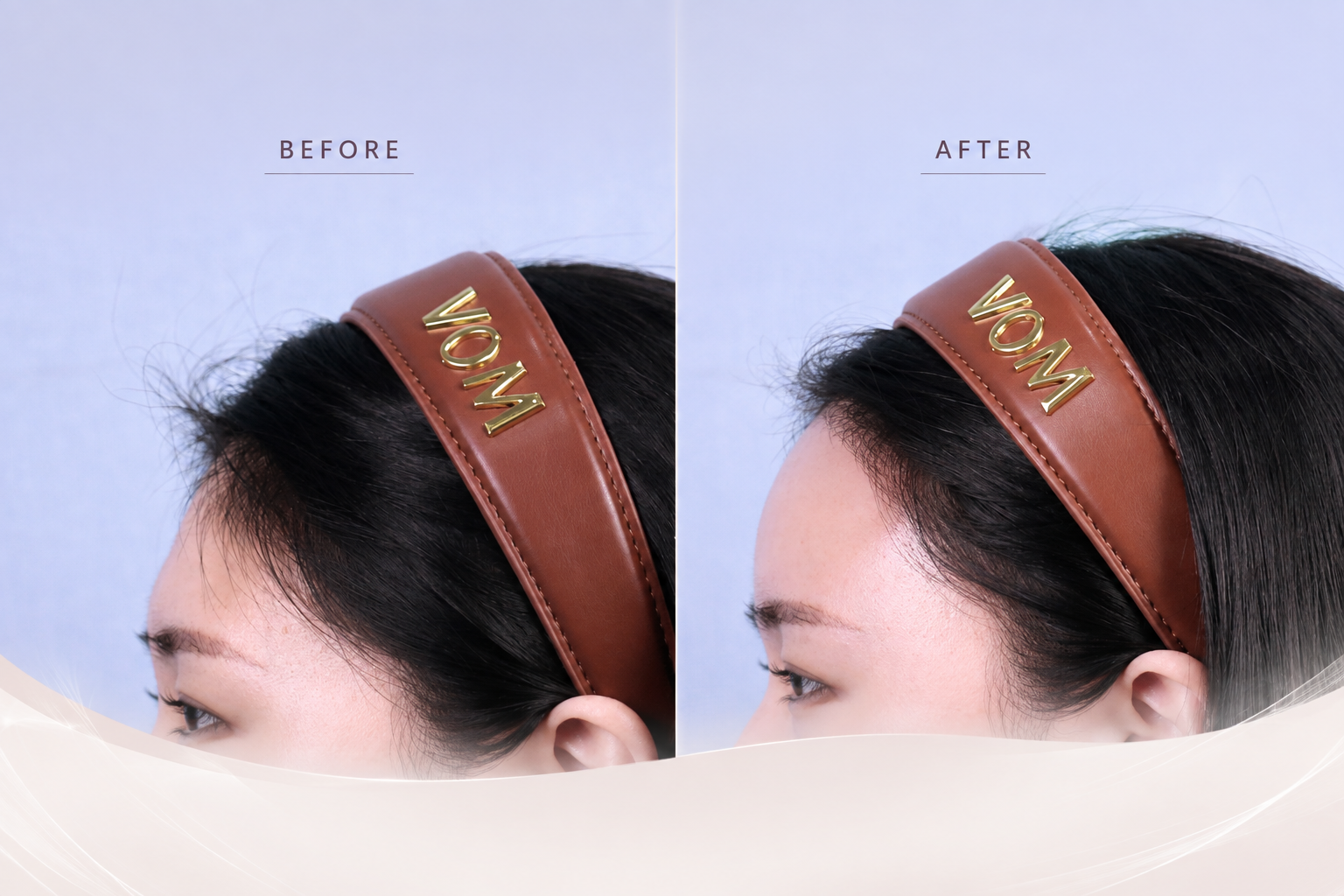
Look at the forehead curvature, areas of hollowness, and how the forehead transitions into the surrounding facial contours.
CASE 02 — Ear Filler

Look at changes in ear projection, shape, and overall balance with the face.
Results vary depending on anatomy, filler type, amount injected, treatment area, and individual response. Before-and-after photographs represent individual cases and do not guarantee the same result for every patient.
What to Expect From Dermal Fillers at Signal Plastic Surgery
Dermal filler treatment is generally performed as a short outpatient procedure.
| Treatment Information | General Guide |
|---|---|
| Treatment Time | Approximately 5–10 minutes |
| Anesthesia | Local anesthesia |
| Hospitalization | Not required |
| Routine Follow-Up | Not required |
| Formal Recovery Period | Not required |
Temporary swelling, redness, tenderness, or bruising may occur after injection even though a formal recovery period is generally not required.
The actual treatment time and recovery experience can vary according to the area and amount of filler used.
Why Filler Placement Matters
With dermal fillers, more volume does not automatically mean a better result.
The same amount of filler can create very different outcomes depending on where and how it is placed.
This is especially important in areas such as the lips, forehead, chin, and nose, where small changes can influence overall facial proportions.
At Signal Plastic Surgery, filler treatment is performed under the care of a board-certified plastic surgeon who also holds a PhD in Medicine, with treatment planning based on the patient’s individual facial structure and desired result.
Frequently Asked Questions About Dermal Fillers
How much filler do I need?
There is no standard amount that is appropriate for every patient.
The amount depends on the treatment area, existing volume, facial proportions, filler characteristics, and desired degree of change.
For areas such as the forehead, patients researching treatment in Korea frequently discuss whether recommendations for several cc are necessary. Rather than choosing an amount first, it is better to determine the desired contour and then decide how much product is appropriate.
Will lip filler make my lips look overfilled?
It does not have to.
A major concern among first-time lip filler patients is maintaining their natural lip shape and avoiding an obviously overfilled appearance.
The result depends on the amount, placement, existing lip anatomy, and desired shape. A conservative approach may be preferable for patients seeking subtle enhancement.
How long do dermal fillers last?
Duration varies depending on the filler product, treatment area, amount injected, individual metabolism, and other factors.
Areas with frequent movement may also behave differently from less mobile treatment areas.
Patients should therefore ask about the expected duration of the specific filler product and treatment area rather than expecting one duration to apply to all fillers.
Can hyaluronic acid filler be dissolved?
Hyaluronic acid fillers can generally be treated with hyaluronidase, an enzyme that breaks down HA filler, when medically appropriate.
However, dissolving filler is still a medical procedure and should not be considered a simple undo button. The reason for dissolution, amount and location of filler, and individual condition should first be assessed.
Can filler migrate?
Filler migration is one of the concerns frequently discussed by patients, particularly with repeated lip or facial filler treatments.
Whether an irregular contour represents migration, swelling, product placement, or another issue requires medical evaluation. Patients with previous filler should inform the doctor about the product, area, amount, and approximate treatment date before receiving additional filler.
Are Korean fillers different from imported fillers?
Both Korean-made and imported filler products are available in Korea, and price differences between products are common. International patients frequently ask whether paying more for an imported product necessarily produces a better result.
Rather than choosing based only on country of manufacture or price, patients should ask which product is being recommended, why it suits the treatment area, and how much will be used.
Is nose filler the same as filler in other areas?
No. The anatomical risks vary depending on the treatment area, and the nose requires particularly careful assessment and injection technique.
Patients considering nose filler should discuss potential complications, product choice, and the clinic’s response plan for complications before treatment. Concerns about nose filler safety are also raised by international patients researching filler treatment in Korea.
Can I get dermal fillers during a short trip to Busan?
Dermal filler treatment itself is relatively short and does not usually require hospitalization.
However, temporary swelling or bruising can occur, and patients undergoing filler—particularly in higher-risk areas—should consider whether they will remain locally available if medical assessment is needed after treatment.
For international patients, treatment timing should therefore be considered as part of the overall travel schedule.
Considering Dermal Fillers at Signal Plastic Surgery in Busan?
When choosing dermal fillers, the first question does not necessarily have to be:
“How many cc should I get?”
A more useful question is:
“Where is volume actually needed, and how much change will maintain balance with the rest of my face?”
At Signal Plastic Surgery, facial proportions, existing volume, treatment area, filler characteristics, and desired results can be evaluated before determining an individual treatment plan.
For international patients considering Dermal Fillers in Busan, understanding the product, amount, placement, expected result, and potential risks can help make a more informed treatment decision.