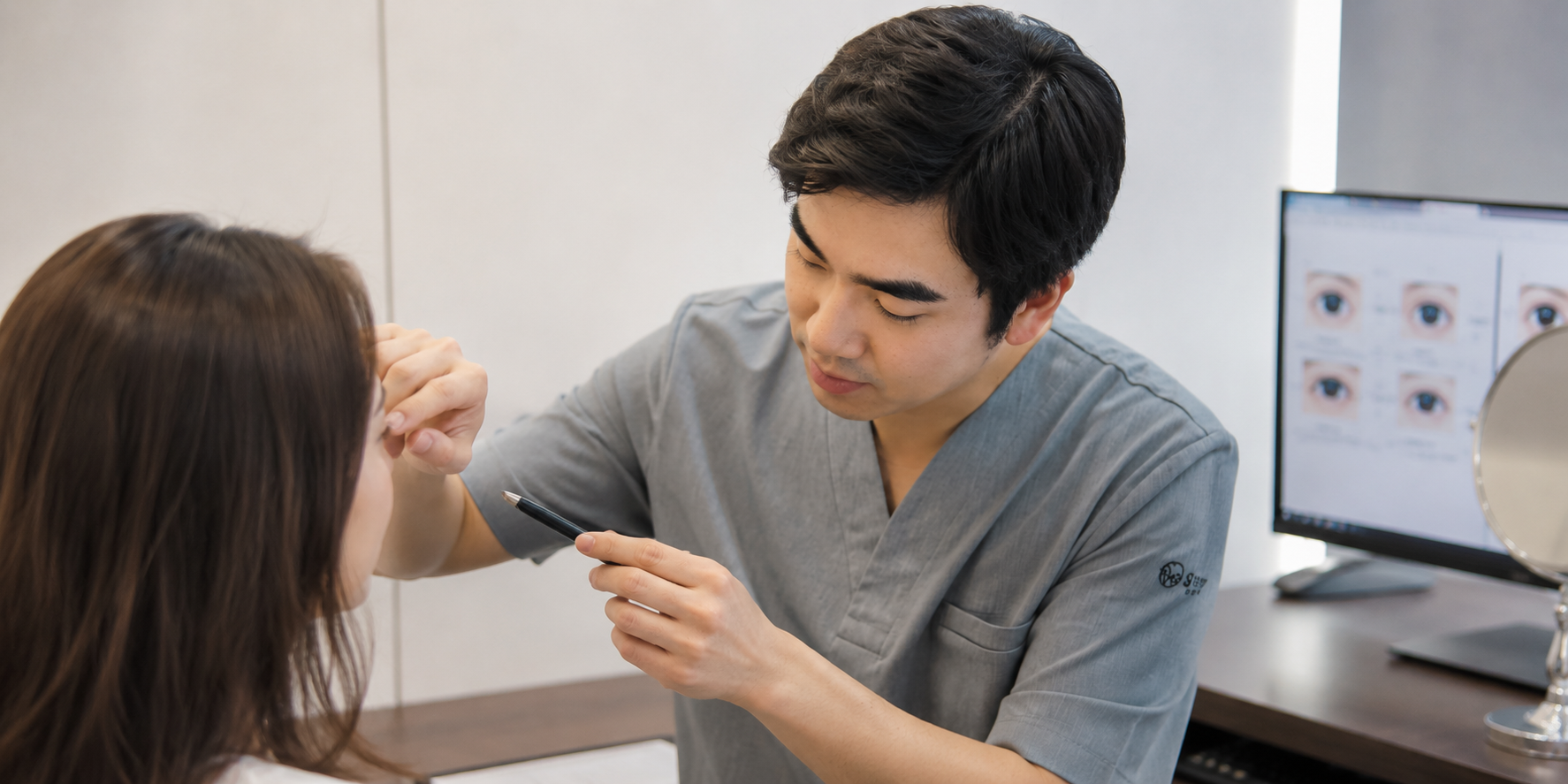
Double eyelid surgery is not simply about creating a visible crease. The height, shape, and method used to form that crease can change how natural, open, or defined the eyes appear. At Signal Plastic Surgery in Busan, double eyelid surgery is planned by considering the individual structure of the eyelids and the type of change the patient is looking for.
For international patients considering double eyelid surgery in Korea, understanding the difference between surgical methods is an important first step. A non-incisional method is not automatically better because it involves less cutting, and an incisional method does not automatically create a more obvious or unnatural result.
The appropriate approach depends on the eyelid itself.
- What Is Double Eyelid Surgery?
- Double Eyelid Surgery Methods at Signal Plastic Surgery
- Comparing Double Eyelid Surgery in Busan
- How Is the Right Double Eyelid Surgery Method Chosen?
- Natural-Looking vs Defined Double Eyelids
- What to Expect From Double Eyelid Surgery at Signal Plastic Surgery
- Double Eyelid Surgery Recovery
- Frequently Asked Questions
- Considering Double Eyelid Surgery at Signal Plastic Surgery in Busan?
What Is Double Eyelid Surgery?
Double eyelid surgery creates or defines an upper eyelid crease. While the concept may sound simple, the surgical plan can vary considerably from person to person.
Factors such as eyelid thickness, excess skin, fat and muscle volume, eyelid-opening strength, asymmetry, and previous eyelid surgery can influence which method may be considered.
The goal is therefore not simply to choose between “incision” and “no incision.” It is to determine how a crease can be created in a way that works with the patient’s existing eyelid structure and desired appearance.
Double Eyelid Surgery Methods at Signal Plastic Surgery
Signal Plastic Surgery offers three approaches to double eyelid surgery:
- Signal Hybrid Eyelid Surgery
- Natural Adhesion Double Eyelid Surgery
- Incisional Double Eyelid Surgery
Each method has different characteristics. The choice should be based on an individual assessment rather than the assumption that one technique is universally better.
Signal Hybrid Eyelid Surgery
Signal Hybrid Eyelid Surgery combines characteristics of incisional and non-incisional approaches to address sagging tissue while creating a natural-looking double eyelid crease.
It may be considered when some tissue adjustment is needed but the patient is also concerned about the scar or swelling associated with a conventional incisional approach.
Who May Consider Signal Hybrid Eyelid Surgery?
This approach may be considered for patients who:
- Have eyelid fat or muscle that may need to be addressed
- Are concerned about scars or swelling after eyelid surgery
- Have a relatively large amount of eyelid fat or muscle that makes a standard buried-suture method difficult
- Previously had a buried-suture double eyelid procedure and need revision because the crease has loosened
Whether the hybrid approach is appropriate still depends on the individual eyelid structure and surgical goals.
Natural Adhesion Double Eyelid Surgery
Natural adhesion double eyelid surgery is designed to create a natural-looking crease without a conventional full incision.
At Signal Plastic Surgery, this method focuses on forming a stable, natural-looking double eyelid line while preserving a less invasive approach where appropriate.
Who May Consider Natural Adhesion?
Natural adhesion may be considered for patients who:
- Have relatively thin eyelids without significant sagging
- Feel their eyes look tired or sleepy
- Want a natural-looking double eyelid crease
- Tend to use their forehead when opening their eyes because their eyelid-opening strength is weak
Not every thin eyelid automatically requires a non-incisional method. Eyelid function, tissue characteristics, and the desired crease should be assessed together.
Incisional Double Eyelid Surgery
One of the most common misconceptions about double eyelid surgery is that an incision automatically creates a more obvious or unnatural result.
An incisional method does not have to mean an unnatural-looking double eyelid.
The method can be considered when the eyelid has skin, fat, or muscle that needs more direct adjustment. For the right candidate, an incision can provide the surgeon with greater ability to address these tissues while planning the crease.
Who May Consider Incisional Double Eyelid Surgery?
An incisional approach may be considered for patients who:
- Want larger or more defined-looking eyes
- Have relatively thick eyelid skin or muscle
- Have sagging upper eyelid skin and a significant amount of fat
- Have more pronounced ptosis
- Have noticeable asymmetry between the eyes
The presence of any one of these characteristics does not automatically determine the surgical method. An in-person medical assessment is necessary before deciding on a surgical plan.

Comparing Double Eyelid Surgery in Busan: Hybrid vs Natural Adhesion vs Incision
There is no single double eyelid technique that is right for every patient.
The key difference is how each approach creates the crease and how much tissue adjustment may be required.
| Method | Main Characteristics | May Be Considered When |
|---|---|---|
| Signal Hybrid Eyelid Surgery | Combines characteristics of incisional and non-incisional approaches | Tissue adjustment may be needed, but the patient is concerned about conventional incision, swelling, or scarring |
| Natural Adhesion | Creates the crease without a conventional full incision | Eyelids are relatively thin and there is little skin sagging |
| Incisional Method | Allows more direct adjustment of skin and other eyelid tissues | There is more significant skin sagging, fat, muscle thickness, ptosis, or asymmetry |
Rather than choosing a method because it sounds less invasive, patients should first understand what actually needs to be changed in their eyelids.
How Is the Right Double Eyelid Surgery Method Chosen?
The method should be selected according to the anatomy of the eyelids rather than recovery time or whether a technique is described as incisional or non-incisional.
During consultation, the surgeon may consider:
- Eyelid thickness
- Skin sagging
- Amount of fat and muscle
- Eyelid-opening strength
- Asymmetry between the eyes
- Previous eyelid surgery
- Preferred crease and overall appearance
For example, relatively thin eyelids with little sagging may allow consideration of natural adhesion, while thicker eyelids or more significant tissue may require another approach.
The goal is to determine which method is appropriate for the patient’s existing eyelid structure and desired result.
Natural-Looking vs Defined Double Eyelids: It Is Not Just About Incision
International patients researching double eyelid surgery in Korea often focus on whether they should choose an incisional or non-incisional method.
But the final appearance depends on more than the surgical method.
A natural-looking result can also be influenced by:
- Crease height
- Eyelid thickness
- Existing eye shape
- Skin and soft-tissue characteristics
- Eyelid-opening strength
- The relationship between the two eyes
- The patient’s preferred degree of definition
A reference photo can be useful for communicating preferences, but the same crease will not necessarily look the same on two different people.
Instead of trying to reproduce another person’s eyes exactly, the consultation should help determine how the preferred characteristics could work with the patient’s own anatomy.
What to Expect From Double Eyelid Surgery at Signal Plastic Surgery
According to Signal Plastic Surgery’s procedure information, double eyelid surgery generally takes approximately 30 minutes to 1 hour and 30 minutes, depending on the surgical plan.
| Procedure Information | General Guide |
|---|---|
| Surgery Time | Approximately 30 minutes–1.5 hours |
| Hospital Stay | Same-day discharge |
| Initial Recovery | Approximately 1–2 weeks |
| Follow-up Visits | Approximately 2–3 visits |
These are general guidelines rather than guarantees. The actual surgical time and recovery experience can vary according to the method performed, the extent of surgery, and individual healing.
Double Eyelid Surgery Recovery
Visible swelling is expected after double eyelid surgery, although the degree and duration can vary considerably between patients.
Signal Plastic Surgery provides an approximate initial recovery period of 1–2 weeks, but this should not be interpreted as the point at which the eyelids have reached their final appearance.
Early swelling can temporarily make a crease appear higher, deeper, or more uneven than expected.
This distinction is particularly important for international patients who may be planning surgery around a trip to Korea. “Initial recovery” and “final settling” are not the same thing.
Patients should follow the postoperative instructions provided by their medical team and attend the recommended follow-up visits.
Frequently Asked Questions About Double Eyelid Surgery
Does incisional double eyelid surgery look less natural?
Not necessarily. An incision does not automatically create an unnatural-looking crease. The final appearance also depends on eyelid anatomy, the amount of tissue being adjusted, crease design, and surgical planning.
For patients with thicker eyelids, excess skin, more fat, or other structural concerns, an incisional approach may allow the surgeon to address those tissues more directly.
How do I know whether I need incisional or non-incisional double eyelid surgery?
The choice should not be based on recovery time or personal preference alone.
Eyelid thickness, skin sagging, fat and muscle, eyelid-opening strength, asymmetry, previous surgery, and the desired crease all need to be considered. A consultation with a qualified plastic surgeon is important before deciding which approach may be appropriate.
What should I look for when choosing a surgeon for double eyelid surgery in Busan?
Look beyond before-and-after photos or the popularity of a particular double eyelid style. It is also important to consider the surgeon’s medical qualifications and whether the consultation focuses on your individual eyelid anatomy rather than recommending the same technique for everyone.
At Signal Plastic Surgery, double eyelid surgery is performed by a board-certified plastic surgeon who also holds a PhD in Medicine. During consultation, the surgical plan considers factors such as eyelid thickness, skin sagging, fat and muscle, eyelid-opening strength, asymmetry, previous surgery, and the type of crease the patient prefers.
For international patients comparing clinics for double eyelid surgery in Busan, these are useful factors to consider alongside recovery time and preferred design.
Why does my double eyelid crease look too high or deep after surgery?
Swelling can temporarily make a newly created crease appear higher, deeper, or more prominent during the early recovery period.
Patients frequently ask when a high or unusually prominent crease is still part of postoperative swelling and when it should be evaluated. The appearance immediately after surgery should not be considered the final result, and persistent or concerning changes should be discussed directly with the operating surgeon.
Can the two eyes heal at different speeds after double eyelid surgery?
Yes. Swelling and healing do not always progress identically on both sides.
Temporary differences between the eyes can occur during recovery, but asymmetry can have several causes. Persistent or significant differences should therefore be evaluated by the surgeon rather than assumed to be swelling.
What if my previous non-incisional double eyelid crease has loosened?
Revision surgery may be considered if a previous crease has weakened, loosened, or disappeared.
The next procedure does not necessarily have to use the same technique. Signal Hybrid Eyelid Surgery is one approach that may be considered for patients whose previous buried-suture crease has loosened.
The appropriate revision method depends on the current eyelid tissue, previous procedure, and what needs to be corrected.
Can double eyelid surgery correct naturally uneven eyes?
Double eyelid surgery may help address certain types of eyelid asymmetry, but perfectly identical eyes should not be expected.
The surgeon first needs to determine what is contributing to the visible difference. Crease height, eyelid-opening strength, skin, fat, and underlying anatomy can all affect asymmetry.
Should I choose my double eyelid line from a reference photo?
Reference photos can be helpful for communicating what you like, such as a subtle crease, a more defined fold, or a particular overall impression.
However, they should be treated as a communication tool rather than a surgical template. The same crease can look different depending on eyelid anatomy, so the design needs to be adapted to the individual patient.
Considering Double Eyelid Surgery at Signal Plastic Surgery in Busan?
If you are considering double eyelid surgery, the first question does not have to be “Should I choose incisional or non-incisional surgery?”
A more useful starting point is:
“What characteristics of my eyelids need to be considered to create the type of crease I want?”
For an initial consultation with Signal Plastic Surgery, it can be helpful to prepare clear photos of your eyes, describe what you would like to change, share reference images if you have them, and mention any previous eyelid procedures.
This gives the medical team more context before discussing whether Signal Hybrid Eyelid Surgery, natural adhesion, an incisional method, or another individualized surgical plan may be appropriate.