

Revision eyelid surgery is not simply about repeating a previous procedure. The surgeon first needs to understand what was done before, what has changed, and what specifically needs to be improved. At Signal Plastic Surgery in Busan, revision eyelid surgery begins with an in-depth consultation and an individualized surgical plan based on the patient’s current eyelid condition and concerns.
For international patients considering revision eyelid surgery in Korea, common concerns include a crease that feels too high or deep, persistent asymmetry, a loosened or weakened crease, or an eyelid shape that simply does not match what they originally wanted.
Because the eyelids have already undergone surgery, revision requires careful evaluation of the existing structure before deciding what should—or should not—be changed.
- What Is Revision Eyelid Surgery?
- When Is Eyelid Revision Surgery Considered?
- Revision Eyelid Surgery in Busan: Why the First Consultation Matters
- Signal Plastic Surgery’s Eyelid Revision Process
- What to Expect From Revision Eyelid Surgery
- Revision Eyelid Surgery Recovery & Follow-Up Calendar
- Before & After Revision Eyelid Surgery
- Signal Plastic Surgery’s Approach to Eyelid Revision
- Frequently Asked Questions
- Considering Revision Eyelid Surgery at Signal Plastic Surgery in Busan?
What Is Revision Eyelid Surgery?
Revision eyelid surgery is a secondary procedure performed after previous eyelid surgery when there is a functional or aesthetic concern that may benefit from further surgical correction.
The reason for considering revision can vary considerably from patient to patient.
Some patients may be concerned about the height or depth of their double eyelid crease. Others may notice asymmetry, a loosened crease, or a shape that does not fit their preferred appearance.
The important question is therefore not simply:
“Can my eyelid surgery be redone?”
It is:
“What is causing my current concern, and what can realistically be changed through revision surgery?”
This distinction is particularly important because revision surgery works with tissue that has already been operated on.

When Is Eyelid Revision Surgery Considered?
There is no single reason why someone considers eyelid revision surgery.
An evaluation may be appropriate when there are concerns such as:
- A double eyelid crease that appears too high or too low
- A crease that looks deeper or more prominent than desired
- Noticeable asymmetry between the eyes
- A previous double eyelid crease that has loosened or weakened
- Multiple or irregular eyelid creases
- An eyelid shape that differs significantly from the patient’s original preference
- Persistent concerns after previous eyelid surgery
These concerns do not automatically mean another operation is necessary.
Postoperative swelling and healing can temporarily affect crease height, depth, and symmetry. The surgeon therefore needs to distinguish between changes that may still be related to healing and concerns that may be appropriate for revision.
Revision Eyelid Surgery in Busan: Why the First Consultation Matters
A revision consultation is different from planning first-time eyelid surgery.
The surgeon needs to assess the current eyelid while also considering the previous operation.
At Signal Plastic Surgery, the revision process begins with an in-depth consultation, followed by design and surgical planning.
Depending on the individual case, the assessment may consider:
- The current height and shape of the eyelid crease
- Eyelid symmetry
- Skin and soft-tissue condition
- Existing surgical changes
- Eyelid-opening function
- Previous surgical history
- The patient’s current concerns
- The result the patient would now prefer
Reference photos from before the first surgery can also be useful if available. They provide additional context about the patient’s original eyelid anatomy and how it has changed.
Rather than simply recreating another crease, the purpose of the consultation is to understand why the patient is considering revision and what can realistically be improved.
Signal Plastic Surgery’s Eyelid Revision Process
Signal Plastic Surgery follows a four-stage process for eyelid revision surgery.
1. In-Depth Consultation
The process begins by reviewing the patient’s previous eyelid surgery, current concerns, and desired changes.
For revision patients, explaining what feels wrong is particularly important. Concerns such as “too high,” “too deep,” “uneven,” or “different from what I requested” can point to very different surgical considerations.
2. Design & Surgical Planning
After evaluating the eyelids, the surgeon develops an individualized design and surgical plan.
The goal is not to apply the same revision technique to every patient, but to determine what needs to be addressed based on the current condition of the eyelids.
3. Surgery
The planned revision is performed according to the patient’s individual surgical assessment.
Signal Plastic Surgery uses a safety system supported by up-to-date equipment and follows strict hygiene management protocols.
4. Focused Follow-Up Care
Revision care continues after the operation.
Postoperative treatment and scheduled follow-up checks allow the medical team to monitor the surgical area and the patient’s recovery over time.
What to Expect From Revision Eyelid Surgery at Signal Plastic Surgery
The following information is based on Signal Plastic Surgery’s general guidance for eyelid revision surgery.
| Procedure Information | General Guide |
|---|---|
| Surgery Time | Approximately 1 hour 30 minutes |
| Anesthesia | Sedation / Local anesthesia |
| Suture Removal | Approximately Day 7 |
| Initial Recovery | Approximately 7 days |
| Hospital Stay | Same-day discharge |
These are general guidelines rather than guarantees. Surgical planning, recovery, swelling, and follow-up needs can vary according to the individual patient and the extent of revision required.
Revision Eyelid Surgery Recovery & Follow-Up Calendar
Revision eyelid surgery does not end when the patient leaves the operating room.
Signal Plastic Surgery provides a structured postoperative schedule extending from the day of surgery through longer-term follow-up.
| Recovery Stage | Follow-Up Care |
|---|---|
| Surgery Day | Aftercare Kit provided |
| Day 1 / 3 / 5 / 7 | Surgical-site care, including disinfection and scheduled suture removal |
| After 2 Weeks | Progress check with the operating surgeon |
| 1–6 Months | Periodic progress checks with the medical team |
The initial recovery period is approximately seven days according to the clinic’s guidance, but initial recovery should not be confused with the final result.
Swelling and changes in crease appearance may continue beyond the first week. Revision patients should follow their individual postoperative instructions and attend the recommended follow-up appointments.
Before & After Revision Eyelid Surgery
Revision cases can be particularly useful when evaluating a surgeon because the reason for revision and the starting condition can vary substantially between patients.
When reviewing revision eyelid surgery before-and-after photographs, consider more than whether the final eyes simply look “better.”
Look at the original concern, such as:
- Crease height
- Crease depth
- Asymmetry
- Multiple or irregular creases
- Overall eyelid shape
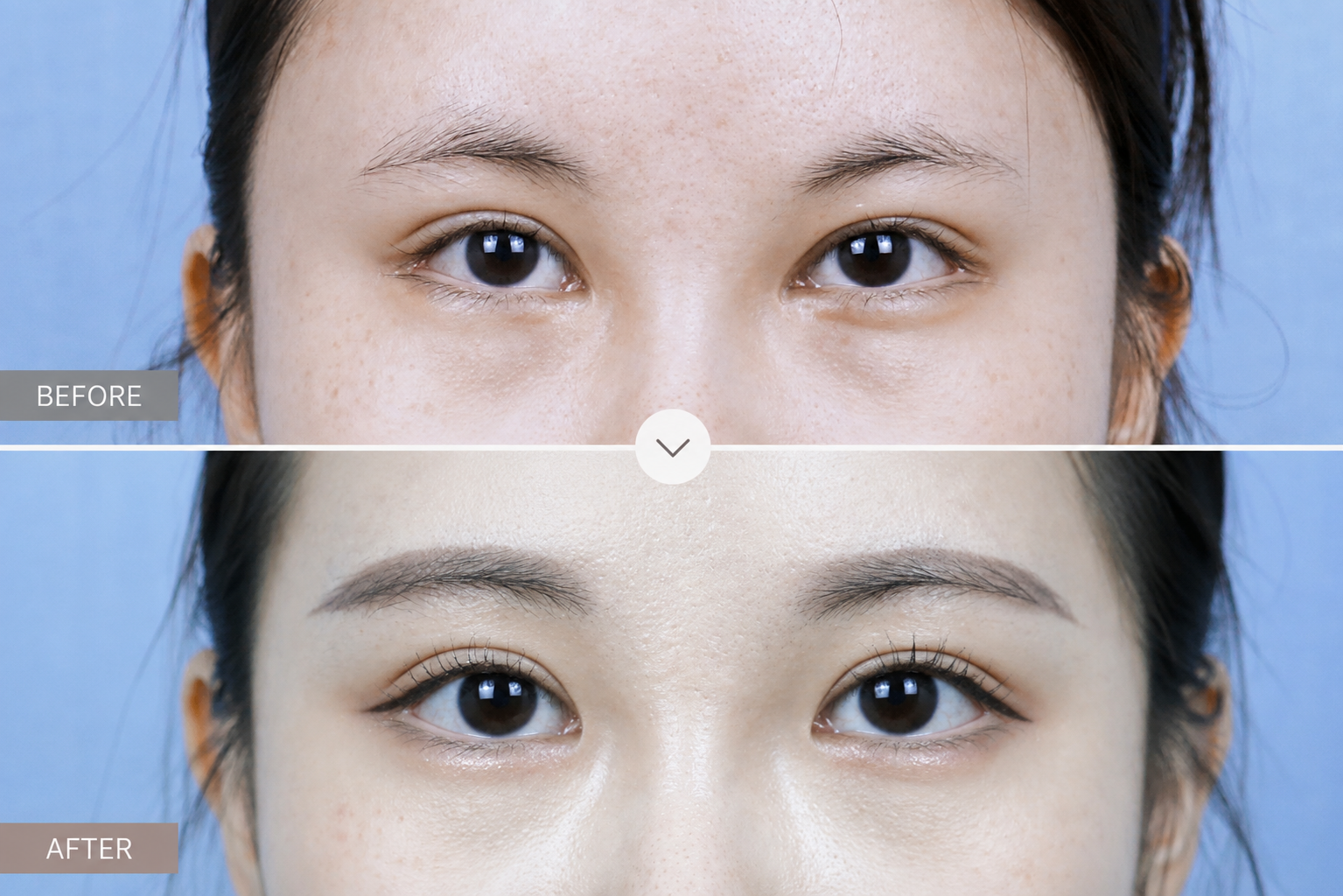
Individual results vary. Before-and-after photographs represent individual cases and do not guarantee the same result for another patient.
Signal Plastic Surgery’s Approach to Eyelid Revision
Revision surgery can require a different level of planning from first-time eyelid surgery because the surgeon is working with previously operated tissue.
Signal Plastic Surgery places particular emphasis on two areas:
Dedicated Eyelid Surgery Care
Eyelid surgery is managed through a dedicated medical team and responsibility-based care system, allowing the surgical plan and postoperative progress to be followed consistently.
Safety & Hygiene System
Signal Plastic Surgery maintains a safety system using up-to-date medical equipment together with strict hygiene management.
For international patients comparing clinics for revision surgery, it is worth looking beyond the procedure name or price alone. Understanding who will perform the surgery, how the revision will be planned, and how postoperative follow-up will be managed can be equally important.
Frequently Asked Questions About Revision Eyelid Surgery
When should I consider revision eyelid surgery after my first surgery?
Timing should be determined individually rather than by choosing an arbitrary date.
Swelling, scar maturation, and changes in the eyelid crease can continue after surgery. A crease that appears high, deep, or asymmetric early in recovery does not necessarily represent the final result.
A plastic surgeon should assess whether the eyelids are still healing or whether there is a concern that may be appropriate for revision.
Can revision surgery fix a high or deep double eyelid crease?
A high or deep crease is one of the concerns patients may discuss during an eyelid revision consultation.
Whether and how it can be improved depends on the cause, previous surgical method, current eyelid structure, existing tissue changes, and the result the patient wants.
Revision should therefore begin with identifying why the crease looks high or deep, rather than assuming the same correction is appropriate for every patient.
What are “sausage eyelids,” and can they be revised?
“Sausage eyelid” is an informal term frequently used in English-language plastic surgery communities to describe a double eyelid crease that looks unusually thick, puffy, or prominent.
It is not a medical diagnosis, and a similar appearance can have different causes. Early postoperative swelling can also make the eyelids temporarily look thicker.
If the appearance persists, the appropriate next step is a medical assessment to determine what is contributing to it and whether revision surgery should be considered.
Can eyelid revision surgery improve asymmetrical eyes?
It may be possible to improve certain types of asymmetry, but the cause needs to be identified first.
Differences in crease height, eyelid-opening strength, existing tissue, previous surgical changes, and natural facial asymmetry can all contribute to uneven-looking eyes.
The goal of revision planning is therefore improvement rather than promising perfectly identical eyelids.
What if my previous double eyelid crease has loosened or created multiple folds?
A weakened crease, disappearing fold, or formation of additional creases can be reasons to seek a revision consultation.
The surgeon needs to evaluate how the previous crease was created and the current condition of the eyelid before determining the appropriate revision plan.
What should I look for when choosing a surgeon for revision eyelid surgery in Busan?
Revision eyelid surgery requires the surgeon to evaluate both the current anatomy and changes created by previous surgery.
When comparing surgeons, consider their medical qualifications, experience with eyelid surgery, approach to revision planning, and postoperative follow-up system—not simply before-and-after photographs or price.
At Signal Plastic Surgery, eyelid surgery is performed under the care of a board-certified plastic surgeon who also holds a PhD in Medicine, with a dedicated eyelid surgery medical team and structured postoperative follow-up.
For international patients researching Revision Eyelid Surgery in Busan, these are useful points to evaluate when comparing clinics.
Is revision eyelid surgery more complicated than first-time double eyelid surgery?
It can be.
Unlike primary surgery, revision involves eyelids that have already undergone surgical changes. The previous technique, existing tissue condition, current crease, and reason for revision all need to be evaluated before a new plan is established.
This is why an in-depth consultation is particularly important for eyelid revision surgery.
What should I prepare for a revision eyelid consultation in Korea?
If possible, prepare:
- Clear current photos of both eyes
- Photos from before your first eyelid surgery
- The date of your previous surgery
- Information about the previous surgical method, if known
- A clear description of what currently concerns you
- Reference photos showing your preferred appearance
- Information about any additional eyelid procedures you have had
For international patients considering Revision Eyelid Surgery in Korea, bringing this information can help the surgeon understand both the original starting point and what has changed since the previous procedure.
Considering Revision Eyelid Surgery at Signal Plastic Surgery in Busan?
If you are unhappy with a previous eyelid surgery, it can be tempting to begin by searching for a specific revision technique.
A better starting point is to identify what is causing the current concern and what can realistically be changed.
Before your consultation at Signal Plastic Surgery, prepare clear photos of your eyes, information about your previous eyelid surgery, photos from before surgery if available, and a specific description of what you would like to improve.
The medical team can then evaluate your current eyelid condition and discuss an individualized revision plan, surgical considerations, and follow-up schedule.


