Are your under-eye bags making you look tired, even after a full night’s sleep?
Puffy under-eyes, dark shadows, and loose skin are common reasons patients consider Eye Bag Surgery in Busan.
But not all under-eye bags require the same surgical approach.
Under-eye fat repositioning is often considered by patients in their 20s and 30s who have prominent under-eye fat but relatively firm skin.
Lower blepharoplasty may be more suitable for patients in their 40s, 50s, and 60s who experience under-eye bags along with loose skin and wrinkles.
However, age alone does not determine which procedure is best.
At Signal Plastic Surgery in Busan, board-certified plastic surgeon Dr. Kyung Wook Nam, M.D., Ph.D., provides individualized consultations for primary and revision eyelid surgery.
In this guide, we’ll compare both procedures, including suitable candidates, costs, recovery, and what international patients should know before choosing eye bag surgery in Korea.
- What Causes Under-Eye Bags?
- Eye Bag Surgery in Busan: Procedure Information & Cost
- Under-Eye Fat Repositioning: Best for Patients in Their 20s & 30s?
- Under-Eye Fat Repositioning vs Lower Blepharoplasty: Which Is Better?
- Why Choose a Board-Certified Plastic Surgeon for Eye Bag Surgery?
- Eye Bag Surgery Before & After: What Results Can You Expect?
- Eye Bag Surgery Recovery: How Long Does It Take?
- Why Choose Signal Plastic Surgery for Eye Bag Surgery in Busan?
- Planning Eye Bag Surgery in Korea as an International Patient
- Frequently Asked Questions About Eye Bag Surgery in Busan
- Considering Eye Bag Surgery in Busan? Consult Signal Plastic Surgery
What Causes Under-Eye Bags?
Under-eye bags can develop due to genetics, aging, changes in fat distribution, and reduced skin elasticity.
The underlying cause determines which treatment may be appropriate.
| Cause | Common Appearance |
|---|---|
| Protruding Under-Eye Fat | Puffy or bulging areas beneath the eyes |
| Tear Trough Hollowing | Depressed areas that create shadows |
| Skin Laxity | Loose or sagging skin beneath the eyes |
| Fine Lines & Wrinkles | Creases associated with aging and reduced elasticity |
| Genetic Factors | Naturally prominent eye bags, sometimes appearing at a young age |
Not all dark circles are caused by under-eye fat. Pigmentation and visible blood vessels may also contribute to a darker appearance.
A proper examination helps determine whether surgery is likely to address the patient’s concerns.

Eye Bag Surgery in Busan: Procedure Information & Cost
At Signal Plastic Surgery, the surgical approach is selected according to each patient’s lower eyelid anatomy.
| Treatment Information | Under-Eye Fat Repositioning | Lower Blepharoplasty |
|---|---|---|
| Main Purpose | Improve protruding fat and uneven under-eye contours | Address under-eye bags, excess skin, and wrinkles |
| Common Age Group | 20s–30s | 40s–60s |
| Surgical Approach | Usually through an incision inside the lower eyelid | May involve an incision beneath the eyelashes |
| Fat Management | Repositions existing fat | May reposition, adjust, or remove selected fat |
| Excess Skin Removal | Generally not included | May be included when necessary |
| Approximate Cost | Low KRW 2,000,000 range | Low KRW 2,000,000 range |
Prices are approximate and may vary depending on the surgical plan and additional procedures.
Important: Lower blepharoplasty may also include fat repositioning. The procedures are not always mutually exclusive.
Under-Eye Fat Repositioning: Best for Patients in Their 20s & 30s?
Under-eye fat repositioning is commonly considered by younger patients who have noticeable eye bags despite relatively firm skin.
The procedure redistributes prominent lower eyelid fat to help create a smoother transition between the lower eyelid and cheek.
For suitable patients, surgery may be performed through an incision inside the lower eyelid, avoiding a visible external skin incision.
This approach is often considered when the main concerns are:
- Prominent under-eye fat
- Puffy eye bags
- Shadows caused by tear trough hollowness
- Uneven under-eye contours
- Minimal excess skin
Although frequently considered by patients in their 20s and 30s, fat repositioning may also be suitable for older patients with good skin elasticity.
Under-Eye Fat Repositioning vs Lower Blepharoplasty: Which Is Better?
The most appropriate procedure depends on whether the main concern is protruding fat, excess skin, or a combination of both.
| Your Main Concern | Procedure That May Be Considered |
|---|---|
| Puffy eye bags with firm skin | Under-eye Fat Repositioning |
| Under-eye bags with tear trough hollowness | Under-eye Fat Repositioning |
| Puffy eye bags with loose skin | Lower Blepharoplasty |
| Significant under-eye wrinkles | Lower Blepharoplasty |
| Under-eye bags with age-related skin laxity | Lower Blepharoplasty, potentially with fat repositioning |
| Concerns after previous under-eye surgery | Individualized revision assessment |
Patients in their 20s and 30s often seek treatment for protruding fat, while patients in their 40s, 50s, and 60s more frequently experience a combination of fat prominence and skin laxity.
However, these are general patterns rather than strict age-based rules.
The final surgical recommendation should be based on the patient’s anatomy and medical assessment.
Why Choose a Board-Certified Plastic Surgeon for Eye Bag Surgery?
Eye bag surgery involves delicate lower eyelid structures, including fat compartments, muscles, and tissues that support eyelid position.
Unlike non-surgical dermatology treatments, under-eye fat repositioning and lower blepharoplasty require surgical adjustment of these structures.
For this reason, patients should seek assessment from a board-certified plastic surgeon experienced in eyelid surgery or another appropriately qualified eyelid surgeon.
An experienced surgeon evaluates:
- Lower eyelid skin elasticity
- Under-eye fat distribution
- Tear trough anatomy
- Lower eyelid position and support
- Previous eye surgery and relevant medical conditions
Potential complications include swelling, bruising, asymmetry, scarring, dry-eye symptoms, and lower eyelid malposition.
Choosing an appropriately qualified surgeon and undergoing a thorough consultation are important steps in understanding these risks.
Eye Bag Surgery Before & After: What Results Can You Expect?
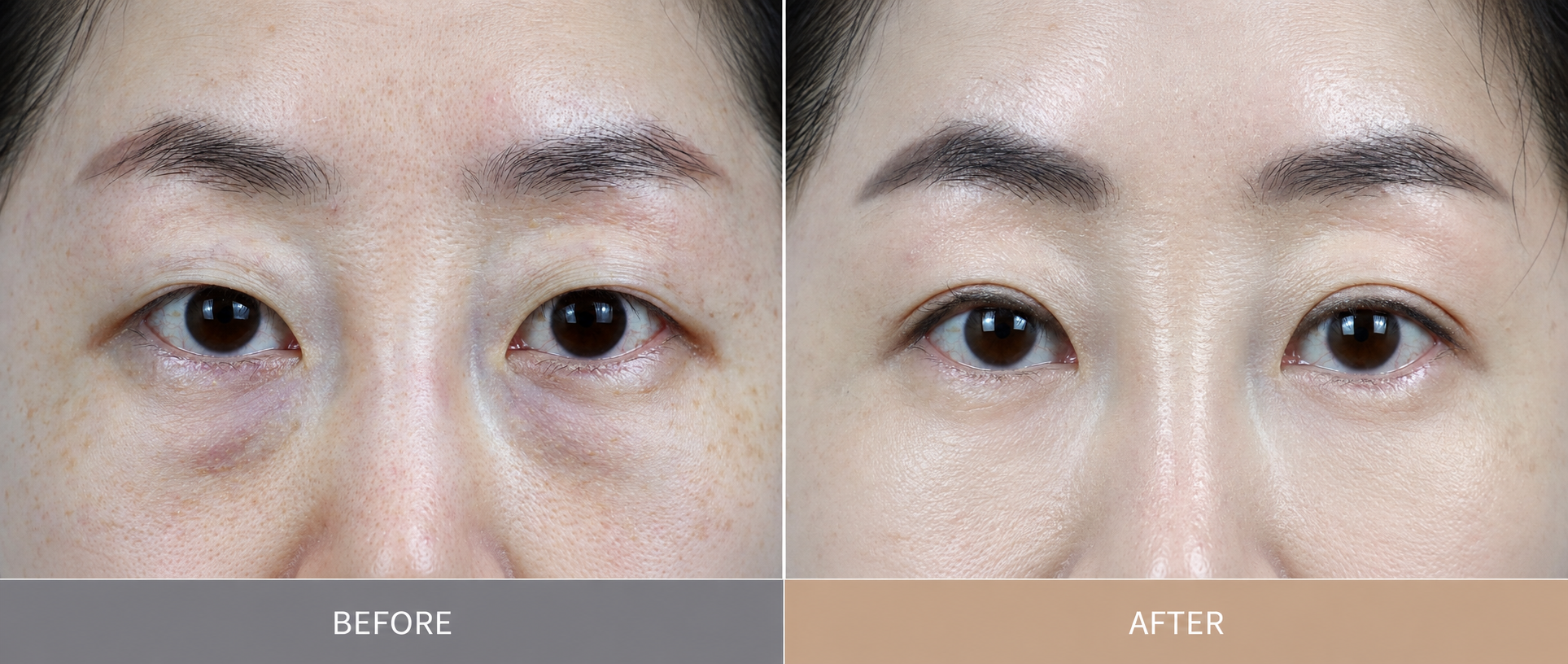
Before and after photographs can help patients understand the different goals of under-eye fat repositioning and lower blepharoplasty.
Under-eye fat repositioning primarily aims to improve puffiness and create a smoother under-eye contour.
Lower blepharoplasty may additionally address excess skin and wrinkles.
When reviewing results, consider:
- Changes in under-eye puffiness
- Improvements in visible hollowness
- The transition between the lower eyelid and cheek
- Changes in excess skin and wrinkles
- Symmetry and natural eyelid position
Surgery does not necessarily eliminate dark circles caused by pigmentation or visible blood vessels.
Individual results vary, and before and after photographs do not guarantee similar outcomes.
Eye Bag Surgery Recovery: How Long Does It Take?
Recovery depends on the surgical technique and individual healing.
At Signal Plastic Surgery, initial recovery after under-eye fat repositioning is generally estimated at approximately 1–2 weeks.
Patients undergoing lower blepharoplasty may require additional healing time, particularly when external incisions or skin removal are involved.
Common postoperative experiences include:
- Temporary swelling and bruising
- Mild tightness or discomfort
- Gradual changes in under-eye contour during healing
If external stitches are used, a follow-up appointment may be required for removal.
Although initial swelling often improves within the first few weeks, subtle tissue changes can continue for several months.
International patients should confirm their postoperative schedule before arranging return flights.
Why Choose Signal Plastic Surgery for Eye Bag Surgery in Busan?
Signal Plastic Surgery is located in Centum City, Busan, and is led by Dr. Kyung Wook Nam, M.D., Ph.D., a board-certified plastic surgeon and former university hospital professor.
Eye surgery and revision eye surgery are key areas of focus at Signal Plastic Surgery.
Under-eye fat repositioning and lower blepharoplasty are also among the clinic’s most frequently requested procedures by international patients.
Individualized Surgical Planning
Rather than recommending surgery based solely on age, Dr. Nam evaluates each patient’s under-eye fat, skin laxity, eyelid position, and facial anatomy.
This helps determine whether fat repositioning, lower blepharoplasty, or a combined approach may be appropriate.
International Patient Support
International patients can receive assistance with:
- Appointment coordination
- Complimentary multilingual interpretation
- One-on-one surgical consultation
- Preoperative preparation
- Postoperative care coordination
Coordination and interpretation services are provided without an additional service fee. Applicable medical fees should be confirmed separately.
Planning Eye Bag Surgery in Korea as an International Patient
If you’re traveling to Busan for eye bag surgery, allow sufficient time for consultation, surgery, and postoperative care.
Before booking your trip, confirm:
- The recommended surgical approach
- Expected recovery time
- Whether stitches require removal
- The postoperative appointment schedule
- When you may be medically fit to travel
Patients should also inform the surgeon about previous eyelid surgery, eye conditions, medications, and relevant medical history.
A preliminary online inquiry can help with planning, but the final surgical recommendation requires an appropriate medical examination.
Frequently Asked Questions About Eye Bag Surgery in Busan
1. What is the difference between under-eye fat repositioning and lower blepharoplasty?
Under-eye fat repositioning primarily addresses protruding fat and uneven under-eye contours. Lower blepharoplasty can also address excess skin, wrinkles, and tissue laxity. Fat repositioning may be included as part of lower blepharoplasty.
2. Is under-eye fat repositioning better for younger patients?
It is often considered by patients in their 20s and 30s who have prominent under-eye fat but relatively firm skin. However, suitability depends on anatomy rather than age alone.
3. Is lower blepharoplasty better for patients over 40?
Lower blepharoplasty may be appropriate for patients with under-eye bags, loose skin, and wrinkles. Some patients over 40 may still be suitable for fat repositioning alone.
4. How much does eye bag surgery cost in Busan?
At Signal Plastic Surgery, under-eye fat repositioning and lower blepharoplasty are generally priced in the low KRW 2,000,000 range. Final pricing depends on the surgical plan.
5. Can under-eye fat repositioning remove dark circles?
It may improve shadows caused by protruding fat and tear trough hollowness. Dark circles caused by pigmentation or visible blood vessels may require different treatments.
6. Will lower blepharoplasty leave a visible scar?
When an external incision is required, a scar may remain beneath the lower eyelashes. Its appearance usually changes over time, but scarring varies between patients.
7. How long does recovery take after eye bag surgery?
Initial recovery after under-eye fat repositioning generally takes approximately one to two weeks. Lower blepharoplasty recovery varies depending on the extent of surgery.
8. Should I see a dermatologist or a plastic surgeon for eye bag surgery?
Because eye bag surgery involves delicate lower eyelid structures, patients should consult a qualified surgeon experienced in eyelid procedures. A board-certified plastic surgeon with relevant surgical experience is an appropriate choice.
9. Can eye bags come back after surgery?
Age-related changes continue after surgery, so under-eye concerns may develop again over time. Long-term outcomes depend on anatomy, surgical technique, and individual aging.
10. Does Signal Plastic Surgery provide support for international patients?
Yes. Signal Plastic Surgery provides complimentary multilingual interpretation and appointment coordination assistance. Patients should confirm their preferred language and appointment requirements before visiting.
Considering Eye Bag Surgery in Busan? Consult Signal Plastic Surgery
Under-eye fat repositioning and lower blepharoplasty address different combinations of under-eye concerns.
Fat repositioning is often considered for prominent eye bags with relatively firm skin, while lower blepharoplasty may be more appropriate when excess skin and wrinkles are also present.
At Signal Plastic Surgery in Busan, board-certified plastic surgeon Dr. Kyung Wook Nam provides individualized consultations for primary and revision eyelid surgery.
International patients can receive complimentary assistance with appointment coordination, multilingual interpretation, and postoperative care arrangements.
To request a consultation, please share your main under-eye concerns, preferred visit date, travel schedule, and previous eye surgery history, if applicable.
Contact Signal Plastic Surgery to explore your options for Eye Bag Surgery in Busan and arrange a personalized consultation.