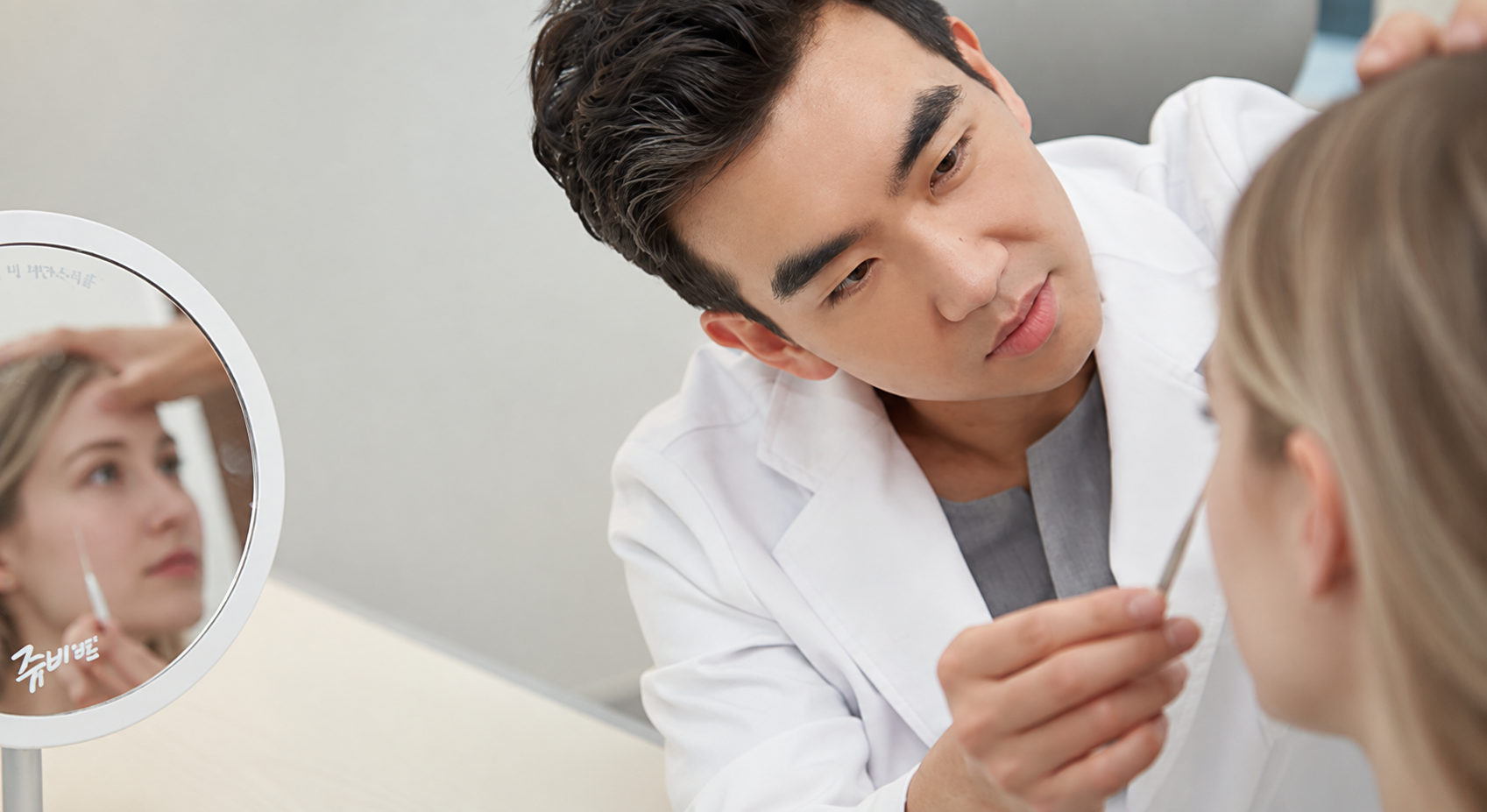
Ptosis correction is designed to improve weak eyelid-opening function and create a clearer, more balanced eye appearance.
At Signal Plastic Surgery, Ptosis Correction in Busan is planned according to how strongly the eyelids open, whether the patient relies on the forehead or eyebrows to open the eyes, the degree of eyelid drooping, and whether double eyelid surgery should be performed together.
For international patients considering Ptosis Correction in Korea, it is important to determine first whether the problem is simply the eyelid crease or whether eyelid-opening strength also needs to be addressed.
- What Is Ptosis Correction?
- Ptosis Correction in Busan: Non-Incisional vs Incisional
- Who May Consider Ptosis Correction?
- Why Accurate Ptosis Correction Matters
- What to Expect From Ptosis Correction at Signal Plastic Surgery
- How Much Does Ptosis Correction Cost at Signal Plastic Surgery?
- Ptosis Correction and Double Eyelid Surgery
- Why Choose Signal Plastic Surgery for Ptosis Correction?
- Frequently Asked Questions About Ptosis Correction
- Considering Ptosis Correction at Signal Plastic Surgery in Busan?
What Is Ptosis Correction?
Ptosis correction, sometimes referred to as eyelid-opening correction, is a surgical procedure used when the eyelids do not open with sufficient strength.
When eyelid-opening strength is weak, patients may experience:
- Part of the iris being covered by the upper eyelid
- A sleepy or tired-looking expression
- Habitual eyebrow lifting
- Frequent use of the forehead muscles to open the eyes
- Forehead wrinkles caused by repeated muscle use
- Eye fatigue or heaviness
Ptosis correction is therefore not only about making the eyes appear larger.
The goal is to improve eyelid opening while creating a balanced and natural eye shape.

Ptosis Correction in Busan: Non-Incisional vs Incisional
The surgical method should be selected according to eyelid condition and the degree of correction required.
| Method | May Be Considered When |
|---|---|
| Non-Incisional Ptosis Correction | The eyelid skin is relatively thin, there is little or no sagging, and the degree of ptosis is mild |
| Incisional Ptosis Correction | Eyelid-opening strength is weaker, the patient frequently uses the eyebrows or forehead to open the eyes, or more direct correction is required |
Non-incisional correction may be appropriate for selected patients who have mild weakness without significant skin laxity.
Incisional correction allows more direct adjustment and may be considered when eyelid-opening weakness is more pronounced.
The appropriate method should be determined after evaluating eyelid thickness, skin condition, muscle function, and overall eye symmetry.
Who May Consider Ptosis Correction?
Ptosis correction may be considered for patients who:
- Have relatively thin eyelids without significant sagging
- Have a sleepy or tired-looking expression
- Want a natural double eyelid line together with improved eye opening
- Have weak eyelid-opening strength
- Frequently raise the eyebrows or use the forehead to open the eyes
- Have noticeable asymmetry related to differences in eyelid-opening strength
A consultation is important because not every patient considering double eyelid surgery necessarily needs ptosis correction.
This is also a common concern among patients researching eye surgery in Korea. Some patients report receiving different recommendations from different surgeons regarding whether ptosis correction is necessary.
Why Accurate Ptosis Correction Matters
Ptosis correction requires careful control of eyelid-opening strength.
During surgery, swelling can gradually make it more difficult to assess the eyelid position accurately. Sedation and anesthesia may also temporarily affect how naturally a patient opens the eyes.
For this reason, Signal Plastic Surgery emphasizes an efficient and precise surgical process so that eyelid height and symmetry can be assessed as accurately as possible.
The goal is to reduce the risk of:
- Overcorrection
- Undercorrection
- Left-right asymmetry
- An overly wide or surprised appearance
These concerns are also frequently discussed by patients after ptosis correction. In community discussions, some patients describe their eyes appearing more open than expected during early recovery, while others worry about persistent asymmetry or overcorrection.
What to Expect From Ptosis Correction at Signal Plastic Surgery
| Surgery Information | General Guide |
|---|---|
| Surgery Time | Approximately 30 minutes–1 hour |
| Anesthesia | Sedation |
| Hospitalization | Same-day discharge |
| Initial Recovery | Approximately 1–2 weeks |
| Follow-Up Visits | Approximately 2–3 visits |
These are general clinic guidelines. Actual recovery and follow-up may vary according to the surgical method and individual healing response.
How Much Does Ptosis Correction Cost at Signal Plastic Surgery?
Ptosis correction pricing at Signal Plastic Surgery is generally:
| Treatment | Price |
|---|---|
| One Side | KRW 495,000 |
| Both Sides | KRW 825,000 |
The final cost may vary depending on whether the procedure is performed alone or together with another eyelid surgery, as well as the individual surgical plan.
For international patients comparing Ptosis Correction in Korea, it is important to consider not only the price but also whether the surgeon has experience evaluating eyelid-opening strength, asymmetry, and revision cases.
Ptosis Correction and Double Eyelid Surgery
Ptosis correction and double eyelid surgery are not the same procedure.
Double eyelid surgery primarily creates or adjusts the eyelid crease.
Ptosis correction primarily addresses eyelid-opening strength.
However, the two procedures may be performed together when both crease design and eyelid-opening function need to be addressed.
This combination is commonly discussed by patients researching Korean eye surgery, particularly when they have unstable eyelid folds, eyebrow compensation, or uneven eyelid opening.
The important point is that ptosis correction should not automatically be added to every double eyelid surgery.
The need for correction should be determined based on eyelid function and anatomy.
Why Choose Signal Plastic Surgery for Ptosis Correction?
Ptosis correction requires more than simply making the eyes appear larger.
The surgeon must consider:
- Eyelid-opening strength
- Amount of iris exposure
- Left-right symmetry
- Eyebrow and forehead compensation
- Eyelid thickness
- Existing double eyelid crease
- Desired eye shape
Signal Plastic Surgery is led by a board-certified plastic surgeon with an M.D. and Ph.D. and experience as a former university hospital professor.
The clinic also has particular experience with eye surgery and revision eye surgery, which is relevant because correcting eyelid-opening strength requires careful assessment of both anatomy and symmetry.
Frequently Asked Questions About Ptosis Correction
Do I really need ptosis correction with double eyelid surgery?
Not necessarily.
Some patients need only double eyelid surgery, while others may benefit from ptosis correction if eyelid-opening strength is weak.
This is one of the most common questions among patients researching eye surgery in Korea, and different surgeons may sometimes give different recommendations.
The decision should be based on eyelid function rather than adding the procedure automatically.
How can I tell if I am using my forehead to open my eyes?
Try relaxing your forehead completely while looking straight ahead.
If your eyelids feel significantly heavier or your eyes appear noticeably smaller when the eyebrows are relaxed, you may be compensating with the forehead muscles.
This type of compensation is frequently discussed in relation to eyelid surgery and ptosis assessment.
A proper examination is still needed to determine whether ptosis correction is appropriate.
Will my eyes look too open after ptosis correction?
During early recovery, swelling and temporary changes in eyelid tension can make the eyes appear more open than expected.
Patients frequently discuss concerns about an overcorrected or surprised appearance during the first few weeks after surgery.
However, persistent inability to close the eye properly, significant dryness, pain, or vision changes should be evaluated promptly rather than assumed to be normal healing.
Can ptosis correction improve asymmetric eyes?
It may help when asymmetry is caused partly by differences in eyelid-opening strength.
However, eye asymmetry can also result from eyebrow position, bone structure, skin, fat, previous surgery, or other anatomical differences.
For this reason, perfectly identical eyes should not be expected.
How long does recovery take after ptosis correction?
Signal Plastic Surgery generally advises an initial recovery period of approximately 1–2 weeks.
However, swelling and eyelid position can continue to change after this period.
Community discussions show that patients often continue to notice changes over several weeks or months, so the early appearance should not always be considered the final result.
Can ptosis correction reduce forehead strain or eye fatigue?
If a patient is frequently using the eyebrows and forehead muscles to compensate for weak eyelid opening, improving eyelid function may reduce the need for this compensatory movement.
Some patients also report less eye fatigue after correction, although individual results vary.
Is non-incisional ptosis correction better than incisional correction?
Neither method is universally better.
Non-incisional correction may be suitable for selected patients with mild ptosis, relatively thin eyelids, and little skin sagging.
Incisional correction may be considered when stronger or more direct adjustment is required.
The appropriate method depends on the patient’s eyelid anatomy and functional condition.
What should I consider when choosing Ptosis Correction in Busan?
Patients should consider more than whether a clinic simply offers ptosis correction.
Useful points to evaluate include:
- Whether the surgeon is a board-certified plastic surgeon
- Experience with eye surgery and revision cases
- How eyelid-opening strength is assessed
- Whether double eyelid surgery is actually necessary
- How asymmetry and overcorrection are managed
- Follow-up care after surgery
At Signal Plastic Surgery, the treatment plan is determined according to individual eyelid anatomy and function rather than using the same degree of correction for every patient.
Considering Ptosis Correction at Signal Plastic Surgery in Busan?
If your eyes appear tired, part of the iris is covered, or you frequently raise your eyebrows to open your eyes, the first question should not simply be:
“Do I need bigger eyes?”
A more useful question is:
“Is my eyelid-opening strength contributing to the way my eyes look and feel?”
At Signal Plastic Surgery, the surgeon evaluates eyelid-opening strength, skin condition, symmetry, eyebrow compensation, and desired eye shape before determining whether non-incisional or incisional correction is appropriate.
For international patients considering Ptosis Correction in Busan, consultation can also help determine whether ptosis correction should be performed alone or together with double eyelid surgery.