
Under-eye bags and hollows can create shadows beneath the eyes, making the face look tired or older even when you are well rested.
Lower Eyelid Fat Repositioning in Busan at Signal Plastic Surgery is designed to address both bulging under-eye fat and the hollow tear trough beneath it.
Rather than simply removing protruding fat, the procedure can reposition appropriate lower-eyelid fat toward the hollow area, helping create a smoother transition between the lower eyelid and cheek.
The surgical plan is individualized according to the amount and position of under-eye fat, tear trough depth, lower-eyelid anatomy, skin condition, and overall facial balance.
- What Is Lower Eyelid Fat Repositioning?
- Under-Eye Bags, Tear Troughs and Dark Circles
- Who May Consider Lower Eyelid Fat Repositioning?
- Fat Repositioning vs Simply Removing Under-Eye Fat
- Lower Eyelid Fat Repositioning in Korea: What to Expect
- Surgery Information & Price
- Important Precautions Before Surgery
- Recovery After Lower Eyelid Fat Repositioning
- Why Choose Signal Plastic Surgery for Lower Eyelid Fat Repositioning in Busan?
- Frequently Asked Questions About Lower Eyelid Fat Repositioning
- Considering Lower Eyelid Fat Repositioning in Busan?
What Is Lower Eyelid Fat Repositioning?
Lower eyelid fat repositioning is a surgical procedure used to improve under-eye bags and tear trough hollows.
When fat beneath the lower eyelid protrudes forward, it can create a visible bulge. If a hollow tear trough is present directly beneath it, the contrast between the bulge and depression can create a stronger shadow.
Instead of simply removing all of the protruding fat, lower eyelid fat repositioning redistributes appropriate fat into the hollow area.
The goal is to create a smoother contour from the lower eyelid toward the upper cheek while avoiding unnecessary loss of under-eye volume.

Under-Eye Bags, Tear Troughs and Dark Circles
These concerns often appear together, but they are not exactly the same problem.
Under-Eye Bags : Protruding lower-eyelid fat can create visible puffiness or bulging beneath the eyes.
Tear Trough Hollows : A depression between the lower eyelid and cheek can create an uneven contour and make the eyes appear more sunken.
Under-Eye Shadows : When a bulge sits above a hollow tear trough, the difference in contour can cast a shadow that makes dark circles appear more noticeable.
This is why simply removing fat is not always the ideal approach.
In selected patients, repositioning existing fat can help address the bulging area and adjacent hollow together.
However, not every dark circle is caused by under-eye anatomy. Pigmentation, thin skin, visible blood vessels, and other factors can also contribute to dark circles, so these concerns should be evaluated separately.
Who May Consider Lower Eyelid Fat Repositioning?
You may consider lower eyelid fat repositioning if you are concerned about:
- Bulging fat beneath the eyes
- Hollow areas under the lower eyelids
- A noticeable tear trough
- Dark under-eye shadows caused by uneven contour
- A tired-looking appearance even when well rested
- An older-looking appearance around the eyes
- An uneven transition between the lower eyelid and cheek
- Under-eye bags that remain noticeable regardless of sleep or skincare
Age alone does not determine whether you are a suitable candidate.
Some younger patients naturally develop prominent under-eye bags or tear troughs, while other patients experience these changes gradually with aging.
The important factors are the position of the fat, degree of hollowing, skin condition, lower-eyelid support, and overall anatomy.
Fat Repositioning vs Simply Removing Under-Eye Fat
One of the most important differences is what happens to the existing fat.
- Fat Removal : Excess fat is removed to reduce under-eye bulging.
- Fat Repositioning : Appropriate existing fat is redistributed toward the hollow tear trough area to improve the transition between the lower eyelid and cheek.
Removing too much under-eye fat can potentially create or worsen a hollow appearance.
For patients who have both a visible fat bulge and tear trough depression, preserving and repositioning appropriate fat may therefore be considered instead of focusing only on removal.
The exact technique should be determined after evaluating the patient’s under-eye anatomy.
Lower Eyelid Fat Repositioning in Korea: What to Expect
Lower eyelid fat repositioning is performed according to the individual anatomy of the lower eyelid.
Depending on the surgical plan, lower-eyelid fat can be accessed through an incision on the inside of the lower eyelid, known as a transconjunctival approach.
Through this approach, the surgeon can access the lower-eyelid fat without creating an external skin incision for the fat repositioning itself.
However, the appropriate surgical technique can differ when significant excess skin, lower-eyelid laxity, or other concerns are present.
At Signal Plastic Surgery, the surgical plan is determined after evaluating the relationship between the protruding fat, tear trough, lower-eyelid support, skin condition, and surrounding facial anatomy.
Surgery Information & Price
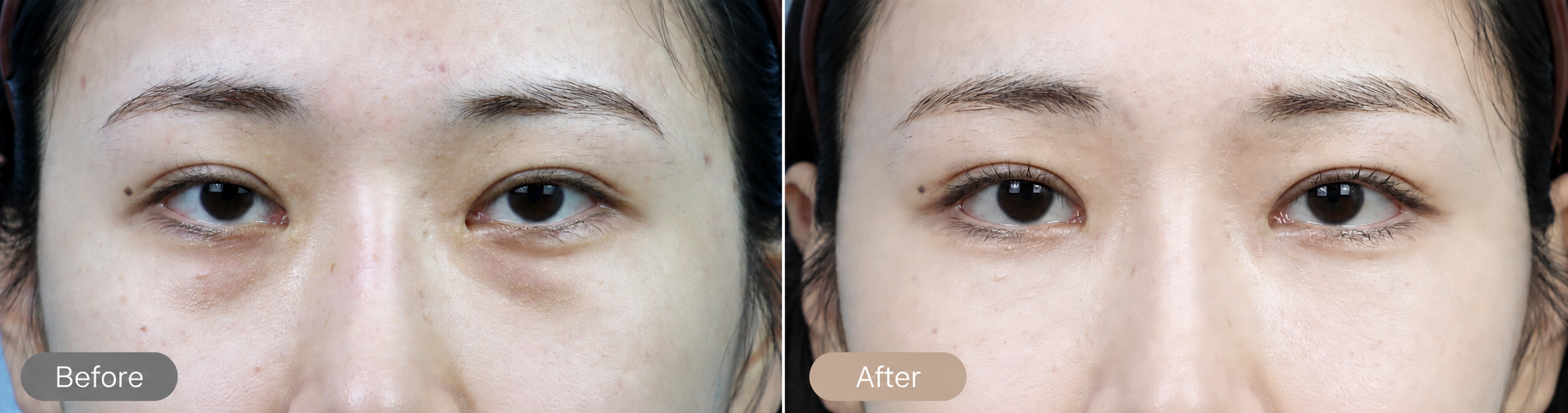
Procedure : Lower Eyelid Fat Repositioning
Main Concerns : Under-eye bags, tear trough hollows, contour-related under-eye shadows
Treatment Area : Lower eyelids and tear trough
Goal : Reposition appropriate under-eye fat to create a smoother lower-eyelid contour
Price : Low-KRW 2 million range
The final price may vary depending on the patient’s anatomy, surgical complexity, and whether additional correction is required.
Important Precautions Before Surgery
Please follow your preoperative instructions carefully to help prepare safely for surgery.
1. Fast for 4 hours before surgery
Do not eat or drink during the instructed fasting period. This includes water, coffee, and chewing gum.
2. Tell us if you take aspirin, anticoagulants, or other medications that affect bleeding
Do not stop prescribed medication on your own. Your surgeon or prescribing physician should advise whether and when it can be safely discontinued.
3. Tell us about supplements and herbal products
This includes omega-3 supplements, vitamin E, red ginseng, and certain herbal medicines, which may affect bleeding or interact with medications.
4. Inform the medical team about all medications you take
Prescription drugs, over-the-counter medications, supplements, and herbal products should be disclosed before surgery.
5. Do not wear jewelry or accessories on the day of surgery
Remove earrings, necklaces, piercings, and other accessories as instructed by the clinic.
6. Avoid smoking and alcohol the day before surgery
Follow the clinic’s instructions regarding smoking and alcohol before and after your procedure.
If you have a medical condition or regularly take medication, inform the medical team before surgery so that individualized instructions can be provided.
Recovery After Lower Eyelid Fat Repositioning
Swelling and bruising are common during the early recovery period after lower-eyelid surgery.
Temporary irritation, tightness, tenderness, or dry-eye symptoms may also occur.
The under-eye contour does not reach its final appearance immediately after surgery. Results become easier to evaluate as postoperative swelling gradually subsides.
During recovery, patients should follow their surgeon’s instructions regarding:
- Cold compresses
- Eye and incision care
- Prescribed medication
- Exercise and strenuous activity
- Sleeping position
- Contact lenses or eye makeup
- Follow-up appointments
International patients should plan their travel schedule around the recommended postoperative follow-up rather than assuming they can leave Korea immediately after surgery.
Why Choose Signal Plastic Surgery for Lower Eyelid Fat Repositioning in Busan?
The under-eye area contains several delicate structures, and successful treatment requires more than simply removing visible fat.
Signal Plastic Surgery is led by a board-certified plastic surgeon with an M.D. and Ph.D. and experience as a former university hospital professor.
The surgical plan considers:
- Amount and position of protruding under-eye fat
- Tear trough depth
- Lower-eyelid contour and support
- Existing under-eye hollowing
- Skin condition
- Facial symmetry
- Previous eyelid procedures
- Overall lower-eyelid and cheek balance
Signal Plastic Surgery also has extensive experience in eyelid surgery and revision cases, which is particularly relevant when evaluating patients who have previously undergone under-eye or eyelid procedures.
International patients can receive pre-visit consultation assistance and medical interpretation support when planning surgery in Busan.
Frequently Asked Questions About Lower Eyelid Fat Repositioning
What is the difference between lower eyelid fat repositioning and under-eye fat removal?
Under-eye fat removal focuses on reducing protruding fat.
Fat repositioning instead preserves appropriate fat and redistributes it toward a hollow tear trough area. For patients who have both bulging fat and hollowing, this can help create a smoother transition rather than simply reducing volume.
Who is a good candidate for lower eyelid fat repositioning?
It may be considered for patients with protruding under-eye fat, tear trough hollows, contour-related shadows, or a tired appearance caused by uneven under-eye contours.
A consultation is necessary because skin laxity, eyelid support, facial volume, and the cause of the concern differ between patients.
Does lower eyelid fat repositioning improve dark circles?
It may improve dark shadows when they are caused or accentuated by the contrast between an under-eye bulge and tear trough hollow.
However, dark circles can also result from pigmentation, thin skin, vascular visibility, and other causes. Fat repositioning therefore does not treat every type of dark circle.
Can lower eyelid fat repositioning make my eyes look hollow?
The purpose of fat repositioning is partly to avoid unnecessary volume loss by using appropriate existing fat to smooth the hollow area.
However, the outcome depends on the patient’s anatomy and surgical technique, which is why the amount of fat removed, preserved, or repositioned should be carefully planned.
Is there an external scar after lower eyelid fat repositioning?
A transconjunctival approach accesses the fat through the inside of the lower eyelid, so it does not create an external skin incision for the fat repositioning itself.
However, patients who require additional skin removal or another procedure may need a different incision plan.
How much does lower eyelid fat repositioning in Busan cost?
At Signal Plastic Surgery, Lower Eyelid Fat Repositioning in Busan is generally in the low-KRW 2 million range.
Final pricing depends on the patient’s anatomy, surgical complexity, and whether additional procedures are required.
How long does swelling last after lower eyelid fat repositioning?
Swelling and bruising are expected during the early recovery period and gradually improve.
The amount and duration vary between patients, so international patients should allow sufficient recovery time and follow their surgeon’s postoperative instructions.
Can under-eye bags come back after fat repositioning?
Fat repositioning changes the position and contour of existing under-eye fat, but it does not stop the natural aging process.
Future changes in skin, soft tissue, and supporting structures can affect the under-eye area over time.
Is lower eyelid fat repositioning the same as lower blepharoplasty?
They are related but not necessarily identical.
Lower blepharoplasty is a broader term for lower-eyelid surgery and may involve fat removal or repositioning, skin management, and other techniques depending on the patient’s anatomy. Fat repositioning specifically describes redistributing lower-eyelid fat to improve contour.
How long should I stay in Korea after lower eyelid fat repositioning?
Your stay should be planned around the surgeon’s recommended postoperative checks and your individual recovery.
Before booking your return flight, confirm the expected follow-up schedule with the clinic, particularly if additional procedures are being performed.
Considering Lower Eyelid Fat Repositioning in Busan?
If your under-eye area looks both puffy and hollow, simply removing fat may not address the complete contour.
The more important question is:
Is the problem excess fat alone, or is there also a tear trough hollow that needs to be addressed?
At Signal Plastic Surgery, lower-eyelid surgery is planned after evaluating the relationship between protruding fat, tear trough depth, eyelid support, skin condition, and overall facial balance.
For international patients considering Lower Eyelid Fat Repositioning in Korea, pre-visit consultation can help determine whether fat repositioning or another lower-eyelid approach is more appropriate before traveling to Busan.