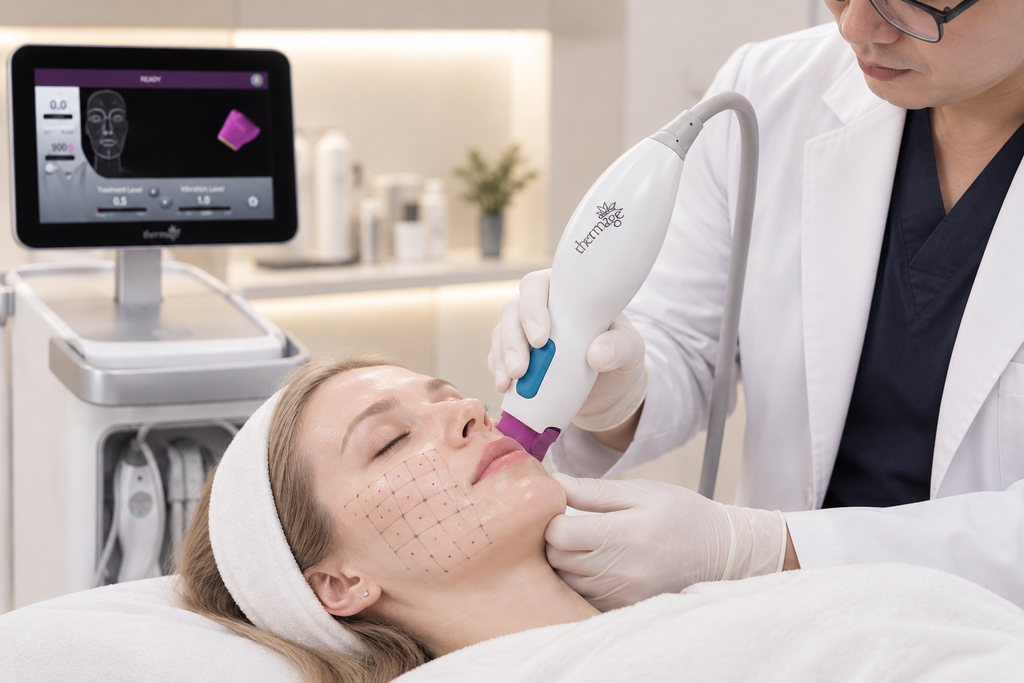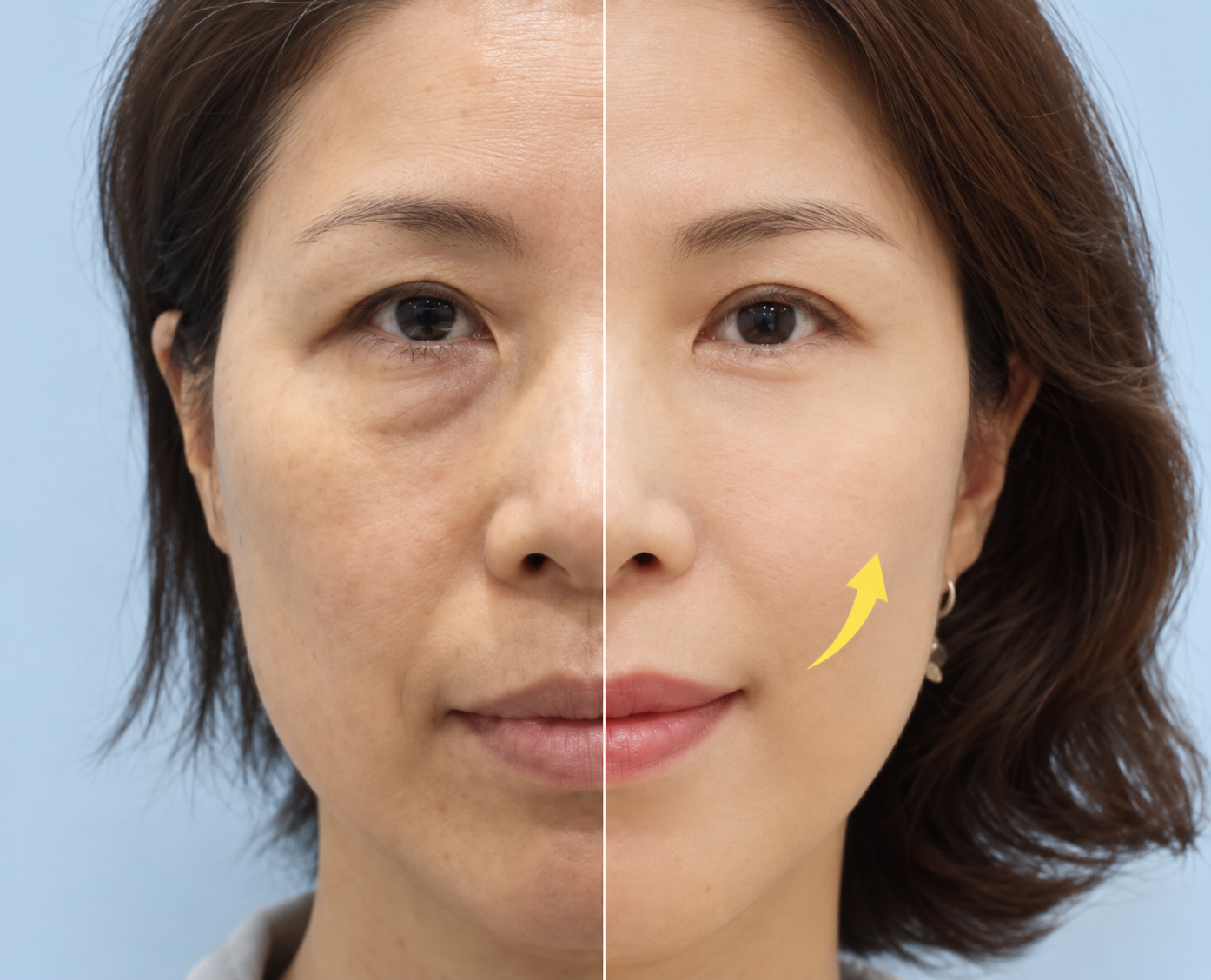
When Ulthera, Thermage, thread lifting, or other non-surgical treatments no longer provide the degree of improvement you are looking for, you may begin considering facelift surgery.
But does that mean you need a full facelift?
Not necessarily.
For international patients considering a Facelift in Busan, understanding the difference between a mini facelift and full facelift is an important first step.
At Signal Plastic Surgery, the choice is based not simply on age, but on where sagging occurs, how advanced it is, facial anatomy, skin condition, and the degree of correction needed.
- What Is Facelift Surgery?
- Mini Facelift vs Full Facelift: What’s the Difference?
- Mini Facelift: For Earlier or More Limited Sagging
- Full Facelift: For More Advanced Facial Sagging
- When Is a Facelift Considered Instead of Laser or Thread Lifting?
- Is a Mini Facelift Enough for Me?
- Mini Facelift vs Full Facelift Recovery
- What About Facelift Scars?
- How Much Does a Facelift Cost in Busan?
- Why Choose Signal Plastic Surgery for Facelift Surgery?
- Frequently Asked Questions About Facelift Surgery
- Considering a Facelift in Busan?
What Is Facelift Surgery?
A facelift is a surgical procedure designed to improve visible facial aging by repositioning sagging facial tissues and managing excess skin.
Unlike treatments that primarily use ultrasound, radiofrequency, or threads, facelift surgery allows the surgeon to directly access and reposition facial tissues.
It may be considered when:
- Facial sagging has become difficult to improve with laser or energy-based lifting treatments
- Thread lifting no longer provides the degree of correction desired
- Jowls and the jawline have become noticeably less defined
- Skin and deeper facial tissues have become significantly lax
- Facial wrinkles and sagging appear more advanced than expected for your age
- You want a more substantial surgical approach to facial aging
A facelift does not simply mean pulling the skin tighter. Surgical planning may involve deeper facial tissues as well as the skin, depending on the technique and the patient’s anatomy.

Mini Facelift vs Full Facelift: What’s the Difference?
Both are surgical lifting procedures, but they differ in treatment area, incision length, degree of correction, and recovery.
| Mini Facelift | Full Facelift | |
|---|---|---|
| Best Suited For | Mild to moderate sagging | More extensive facial sagging |
| Main Concerns | Early jowls, lower-face laxity, jawline | Cheeks, lower face, jowls and more extensive laxity |
| Treatment Area | More limited lower-face area | Broader facial area |
| Incision | Shorter, more limited incision | Longer incision around the ear/hairline depending on surgical plan |
| Surgical Extent | More limited | More comprehensive |
| Recovery | Generally faster | Generally longer |
| Price at Signal | High-KRW 3 million range | Low-KRW 8 million range |
The difference should not be understood as simply “small surgery vs big surgery.”
The more important question is how much tissue needs to be repositioned to create an appropriate result.
Mini Facelift: For Earlier or More Limited Sagging
A mini facelift is generally considered when facial sagging is present but remains relatively limited.
At Signal Plastic Surgery, a mini facelift uses a short incision of approximately 3–5 cm in front of the ear, allowing the surgeon to address selected areas of lower-face laxity through a more limited surgical approach.
It may be considered for patients concerned about:
- Early jowls
- Mild to moderate lower-face sagging
- A jawline that has begun to lose definition
- Early facial aging that requires more correction than non-surgical lifting can provide
- Patients who want surgical lifting with a more limited treatment area
Because the surgical area and incision are more limited than with a full facelift, recovery is generally faster.
At Signal Plastic Surgery, a mini facelift is generally in the high-KRW 3 million range.
Full Facelift: For More Advanced Facial Sagging
A full facelift is a more comprehensive surgical approach for patients with greater facial laxity.
It may be considered when concerns extend beyond early jowling and involve broader areas of the face.
Common concerns include:
- More noticeable cheek sagging
- Deeper nasolabial folds associated with tissue descent
- Pronounced jowls
- Loss of jawline definition
- More extensive lower-face laxity
- Facial aging that is difficult to improve sufficiently with non-surgical treatments
At Signal Plastic Surgery, facelift surgery is planned with attention to the SMAS layer, a deeper fibromuscular support layer beneath the skin.
Rather than relying only on skin tension, the surgical plan addresses deeper supporting tissues according to the patient’s anatomy and degree of sagging.
When Is a Facelift Considered Instead of Laser or Thread Lifting?
Non-surgical lifting treatments can be useful, but they have limitations.
Ulthera and other energy-based lifting treatments can be considered for patients who want non-surgical improvement in appropriate degrees of laxity.
Thread lifting can provide mechanical lifting without traditional facelift surgery in selected patients.
However, neither approach can reproduce the tissue repositioning possible with surgical facelift procedures.
Facelift surgery may become worth discussing when:
- Sagging is too advanced for the improvement expected from energy-based treatments
- Previous lifting treatments provide only limited improvement
- The effect of thread lifting is no longer sufficient for the patient’s concern
- There is significant skin and soft-tissue laxity
- The patient wants a more substantial degree of correction
This does not mean everyone with sagging should have surgery.
The important question is whether the degree of laxity matches what a non-surgical treatment can realistically improve.
Is a Mini Facelift Enough for Me?
This is one of the most common questions patients ask when comparing facelift options.
A mini facelift may be appropriate when the main concern is earlier or relatively limited lower-face sagging.
However, choosing a mini facelift only because the incision is shorter, recovery is faster, or the price is lower may not be appropriate if the sagging is more extensive.
If laxity extends across broader areas of the cheeks, lower face, or surrounding tissues, a limited procedure may not address all of the concerns.
Similarly, having a full facelift when only limited correction is required may be more surgery than necessary.
The decision should therefore be based on anatomy and degree of sagging rather than age or procedure name alone.
Mini Facelift vs Full Facelift Recovery
Recovery is one of the biggest differences for international patients deciding between the two procedures.
A mini facelift generally has a shorter recovery period because the incision and surgical area are more limited.
A full facelift involves more extensive tissue work and generally requires more time for swelling and bruising to settle.
General recovery considerations can include:
- Mini Facelift : Initial recovery is typically faster, although swelling, bruising, tightness, and incision healing still need time.
- Full Facelift : More noticeable swelling and bruising can occur during the early recovery period, and patients should allow a longer period before expecting to look socially presentable.
Recovery varies considerably between patients and surgical techniques.
Cleveland Clinic notes that less invasive mini facelifts may allow return to work sooner than more invasive traditional facelifts, while swelling and bruising after facelift surgery can continue for several weeks.
For international patients, this difference should be considered when planning how long to remain in Korea after surgery.
What About Facelift Scars?
Both mini and full facelifts require surgical incisions.
The difference is primarily in their extent and placement.
A mini facelift generally uses a shorter incision around the ear area, while a full facelift requires a longer incision pattern depending on the areas being treated.
Facelift incisions are generally planned around natural contours near the ear and hairline so that scars can become less conspicuous as they mature.
However, scar healing varies from person to person.
Factors such as individual healing tendency, skin tension, incision care, smoking, and surgical technique can affect how scars mature.
For this reason, patients should consider the long-term incision plan rather than choosing a mini facelift solely because the scar is shorter.
How Much Does a Facelift Cost in Busan?
At Signal Plastic Surgery, approximate facelift prices are:
Mini Facelift : High-KRW 3 million range
Full Facelift : Low-KRW 8 million range
Final pricing can vary according to the patient’s anatomy, degree of sagging, surgical extent, and whether additional procedures are recommended.
For international patients comparing Facelift in Korea, it is also important to compare what is actually included in the surgical plan rather than comparing price alone.
A procedure described as a “facelift” can differ considerably in treatment area and surgical extent.
Why Choose Signal Plastic Surgery for Facelift Surgery?
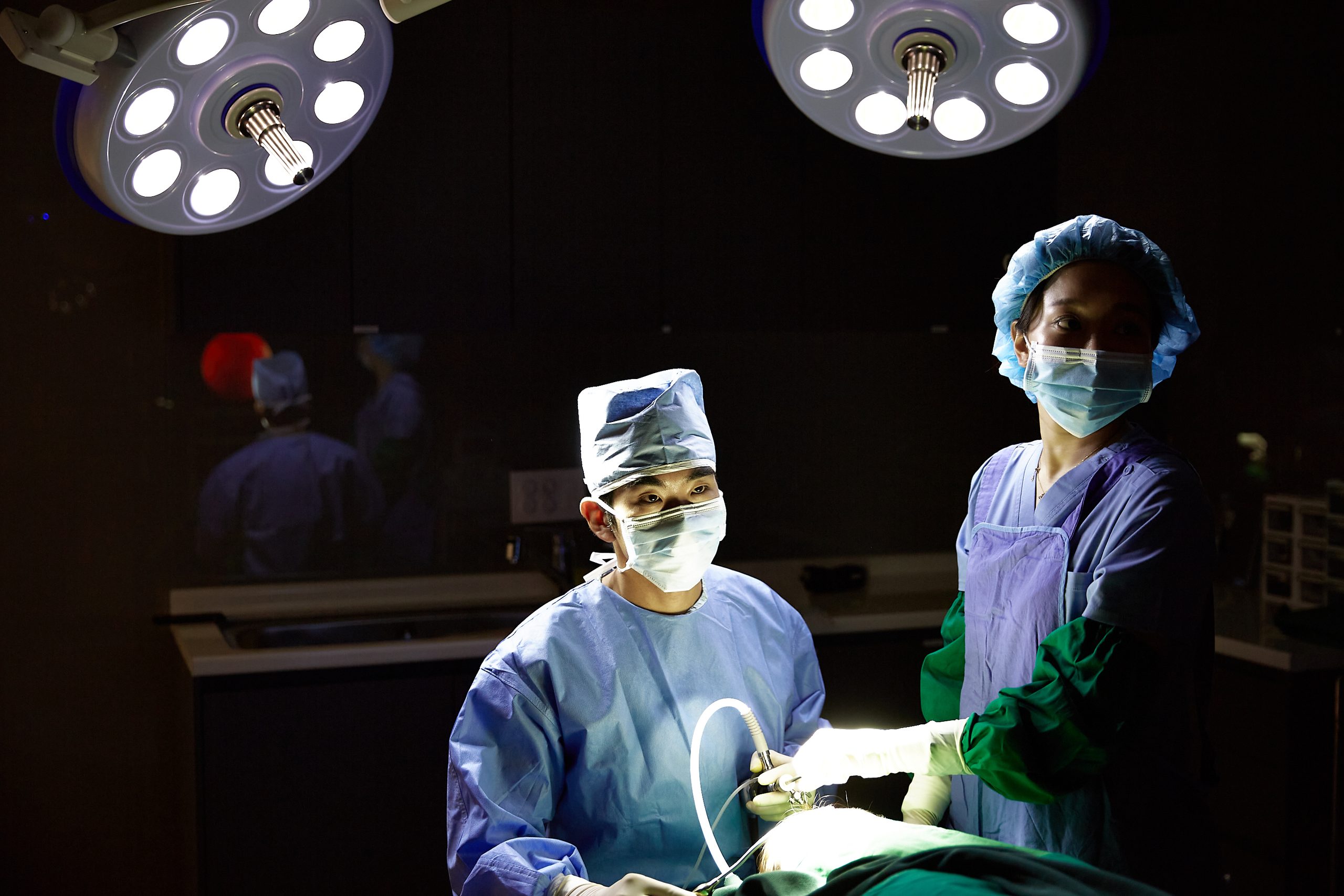
Facelift surgery requires an understanding of facial anatomy beyond simply removing loose skin.
Signal Plastic Surgery is led by a board-certified plastic surgeon with an M.D. and Ph.D. and experience as a former university hospital professor.
Facelift planning considers:
- Degree and location of facial sagging
- Skin laxity
- Deeper tissue support
- Facial proportions
- Existing scars or previous procedures
- Whether a mini or full facelift provides the appropriate surgical range
The goal is not to recommend the largest surgery possible, but to determine how much lifting is actually required for the patient’s anatomy.
Signal Plastic Surgery also provides pre-visit consultation assistance and medical interpretation support for international patients planning surgery in Busan.
Frequently Asked Questions About Facelift Surgery
How do I know if I need a mini facelift or full facelift?
The decision depends primarily on the location and degree of facial sagging.
A mini facelift may be considered for earlier or more limited lower-face laxity, while a full facelift may be appropriate when sagging is more extensive. An in-person assessment is important because age alone does not determine which procedure is appropriate.
What age is best for a facelift?
There is no single best age.
People age differently depending on genetics, facial anatomy, skin quality, lifestyle, and previous treatments. The degree and pattern of sagging are generally more useful considerations than chronological age alone.
Is a mini facelift less painful than a full facelift?
A mini facelift is a less extensive operation and generally has a faster recovery, but it is still surgery.
Pain, tightness, swelling, bruising, and sensitivity vary by patient and surgical technique.
How long does it take to recover from a mini facelift?
Recovery varies, but a mini facelift generally has a shorter initial recovery than a traditional full facelift.
Patients should still expect a period of swelling, bruising, tightness, and scar healing rather than assuming that “mini” means no downtime.
How long should I stay in Korea after a facelift?
This should be planned with your surgeon according to the procedure and follow-up schedule.
International patients should allow enough time for early postoperative checks, incision care, and suture removal when required rather than scheduling a flight immediately after surgery.
Where are facelift scars located?
Incisions are generally designed around the natural contours near the ear and may extend into the hairline depending on the surgical approach.
A mini facelift usually uses a shorter incision, while a full facelift typically requires a longer incision pattern.
Can a facelift look natural?
A facelift does not have to create an obviously “pulled” appearance.
Natural-looking results depend on factors including facial anatomy, the direction and amount of tissue repositioning, skin management, and surgical planning.
Can Ulthera or thread lifting replace a facelift?
They can be useful alternatives for selected patients with an appropriate degree of laxity, but they cannot reproduce the tissue repositioning possible with facelift surgery.
When sagging becomes more advanced, a surgical consultation may help determine whether continued non-surgical treatment is likely to meet the patient’s goals.
How much does Facelift in Busan cost?
At Signal Plastic Surgery, a mini facelift is generally in the high-KRW 3 million range, while a full facelift is generally in the low-KRW 8 million range.
Final cost depends on the surgical plan, anatomy, degree of sagging, and whether additional procedures are required.
Is a mini facelift worth it if I will eventually need a full facelift?
That depends on your current anatomy and goals.
A mini facelift should not simply be viewed as a temporary step before everyone eventually receives a full facelift. For a patient whose current sagging can appropriately be addressed through a limited procedure, it may be a reasonable surgical option.
Conversely, choosing a mini facelift when the degree of sagging requires a more comprehensive approach may result in an insufficient correction.
Considering a Facelift in Busan?
Choosing between a mini facelift and full facelift should not begin with age, price, or incision length alone.
The more useful question is:
How much of my face actually needs to be lifted?
For earlier, localized lower-face sagging, a mini facelift may provide an appropriately limited surgical approach with comparatively faster recovery.
For more extensive facial laxity, a full facelift allows a broader surgical correction.
At Signal Plastic Surgery, the surgical plan is determined after evaluating facial anatomy, degree of sagging, deeper tissue support, previous treatments, and the patient’s desired result.
For international patients considering a Facelift in Korea, pre-visit consultation can also help determine which approach may be appropriate before traveling to Busan.